The stock market has delivered double-digit returns in six of the past seven years. The only exception was 2022, when high inflation caused a downturn. This strong performance has helped many investors reach their financial goals.
While positive returns are always good news for portfolios, they can also make investors nervous. This is especially true when stock prices are near record highs and valuations (what investors pay for each dollar of company earnings) are approaching levels last seen during the dot-com boom of the late 1990s.
In 2025, several important trends developed. Inflation, which had been a major concern, has stabilized around 3%. Tariffs (fees on imported goods) remained high and caused some market swings, but didn't disrupt the economy as much as some feared. The Federal Reserve (the Fed) continued to lower interest rates, and the economy kept growing at a healthy pace.
Looking at the bigger picture, one key lesson is that the things investors worry about most often don't happen. For example, the recession many predicted since 2022 never occurred. History shows that for every real crisis, like the 2020 pandemic, there are many feared events that never materialize. The key for long-term investors is staying focused and disciplined through all market conditions.
As we look ahead to 2026, there will be many topics in the news, including the midterm election, new Federal Reserve leadership, artificial intelligence (AI), and more. What matters most is having a portfolio that can handle uncertainty while capturing long-term growth. Here are seven key themes to help guide your thinking about the year ahead.
1. Different types of investments are working together
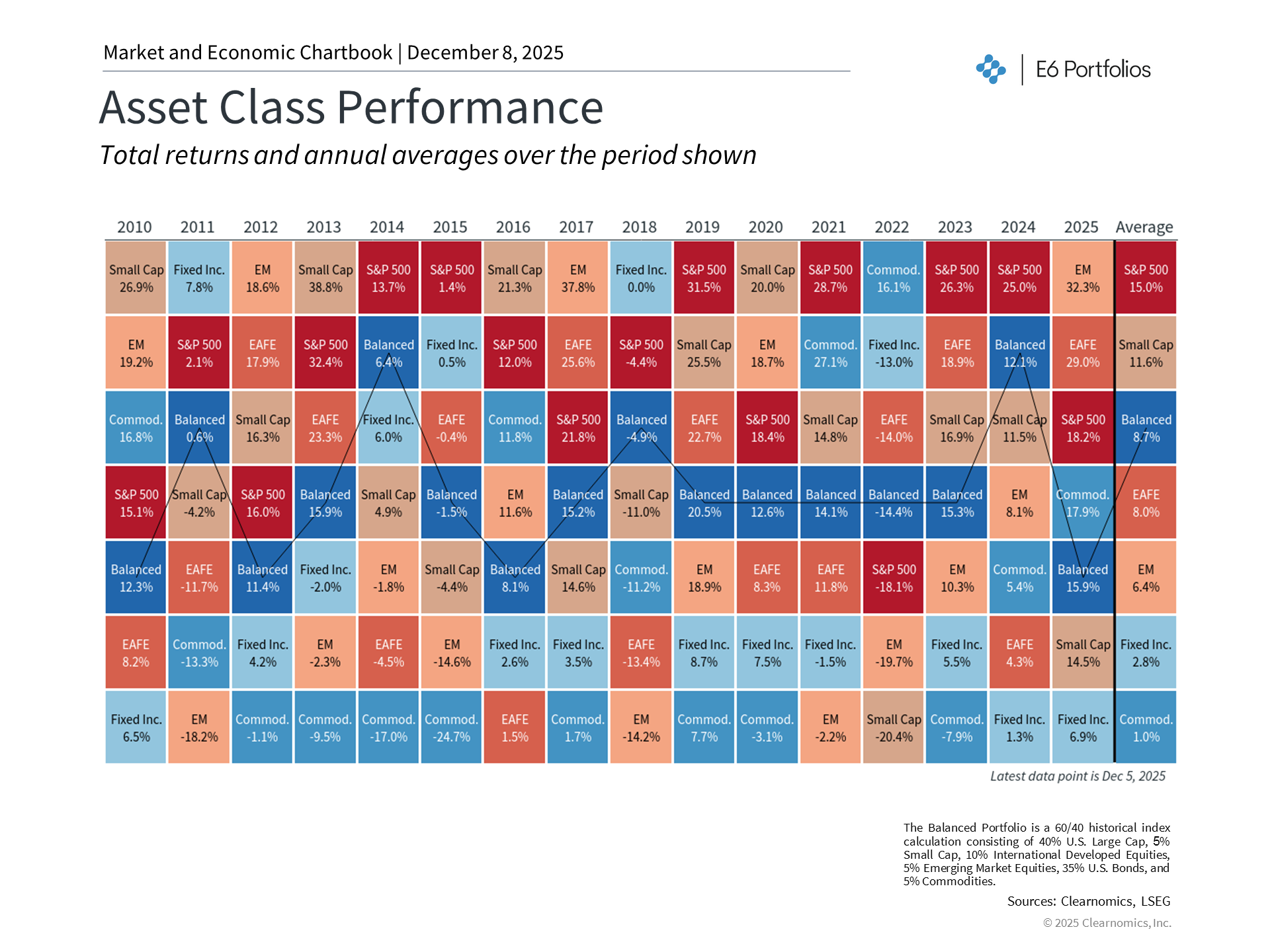 |
Many different asset classes (types of investments) are contributing to portfolio returns as we enter 2026. This is different from much of the past decade, when U.S. stocks outperformed everything else. In 2025, international stocks have done better than U.S. stocks, with developed and emerging market stocks each gaining around 30%. This has been helped by improving economic growth in other countries and a weaker U.S. dollar.
Bonds are also playing an important stabilizing role. As the Federal Reserve continues to cut interest rates and inflation stabilizes, bonds have provided income and helped offset stock market ups and downs during uncertain periods.
This highlights the importance of having a balanced and diversified portfolio. While it may be tempting to make sudden changes based on headlines, investors who stick with their financial plans are likely to be rewarded.
2. Stock prices are approaching dot-com levels
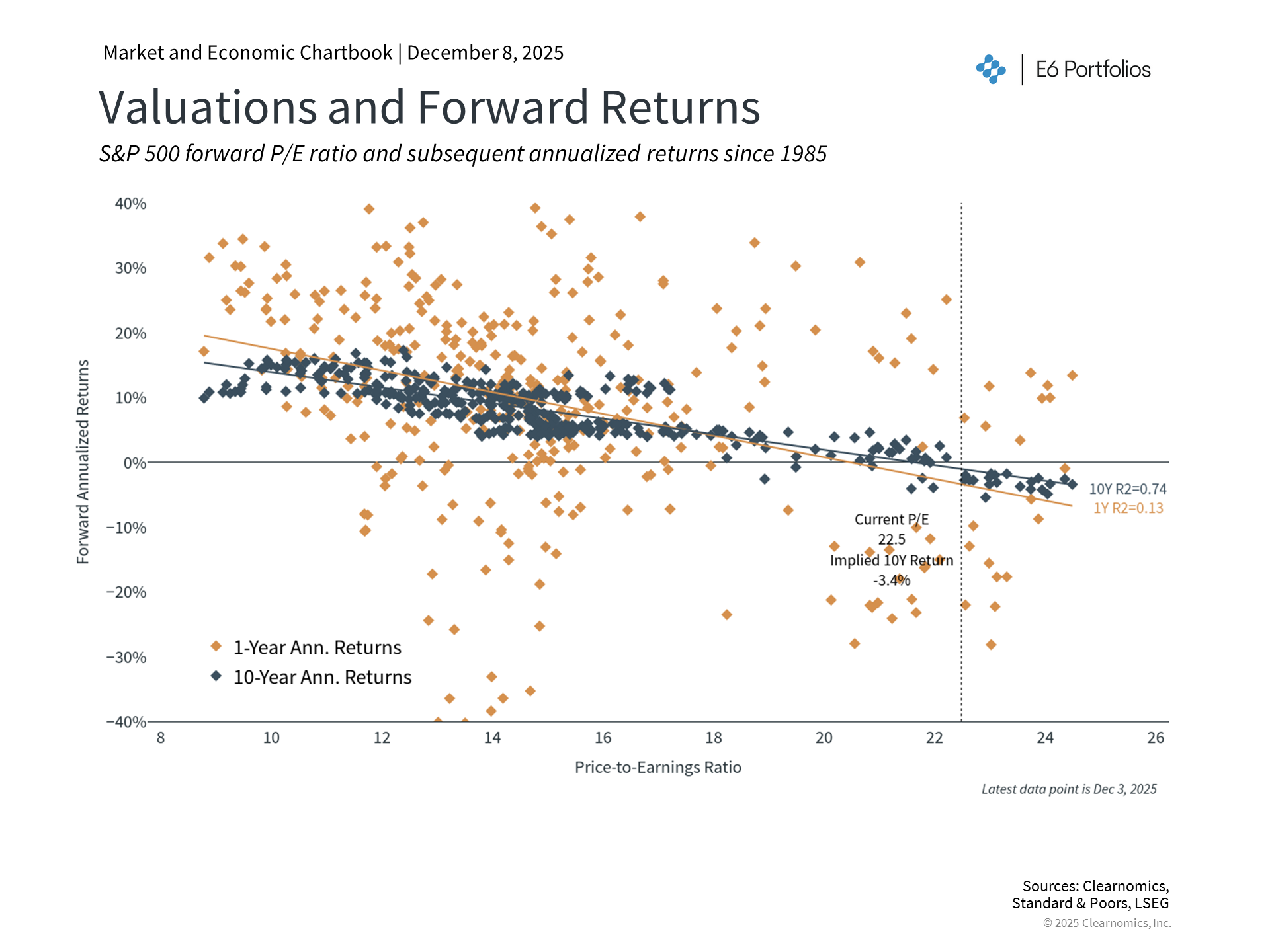 |
After several years of strong returns, stock valuations continue to rise. The S&P 500 currently trades at a price-to-earnings ratio of 22.5x, approaching the all-time high of 24.5x reached during the dot-com bubble. This means investors are paying more for each dollar of future earnings than in recent years.
While valuations are expensive today due to enthusiasm around AI and economic growth, corporate fundamentals (the underlying financial health of companies) remain strong. Companies are earning solid profits, with expectations they could continue to grow.
High valuations don't necessarily predict immediate market declines. However, they do suggest that future returns could be more modest, since markets are already accounting for future growth. This also means markets can be more sensitive to disappointments. Being selective and maintaining balance across different parts of the market will be important.
3. AI is transforming the economy
 |
Perhaps no trend has captured more attention than artificial intelligence (AI). Investment in AI infrastructure reached extraordinary levels in 2025, with total spending easily reaching trillions of dollars. This includes building data centers, purchasing equipment, and hiring AI researchers.
Businesses are increasingly adopting AI. According to the Census Bureau, the share of businesses reporting use of AI more than doubled from 4% in September 2023 to 10% in September 2025. While these numbers have jumped, they still have significant room for growth.
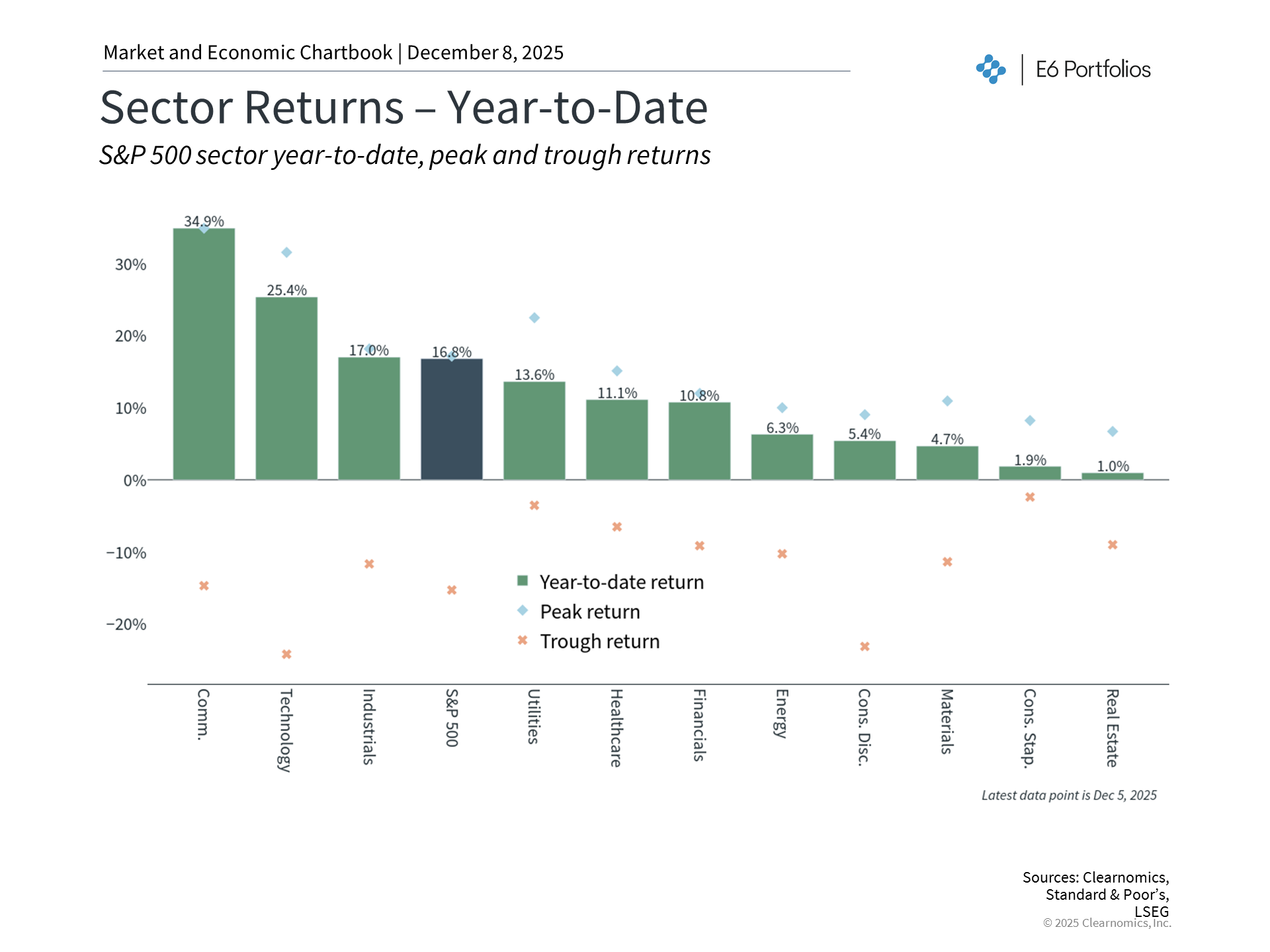
For investors, AI presents both opportunities and risks. The Magnificent 7 technology companies continue to lead markets higher. However, these companies now represent about one-third of the S&P 500, meaning most investors have substantial exposure whether they realize it or not. The key is being aware of this concentration and staying true to an appropriate asset allocation that fits with long-term goals.
4. The economy continues growing
 |
Economic growth has slowed but remains stronger than many feared. U.S. GDP (the total value of goods and services produced) experienced a small dip in early 2025 but rebounded quickly with 3.8% growth in the second quarter - one of the strongest rates in years.
The International Monetary Fund projects global growth could ease slightly from 3.2% in 2024 to 3.1% in 2026. Advanced economies are projected to grow around 1.5%, while emerging markets are projected to maintain growth above 4%.
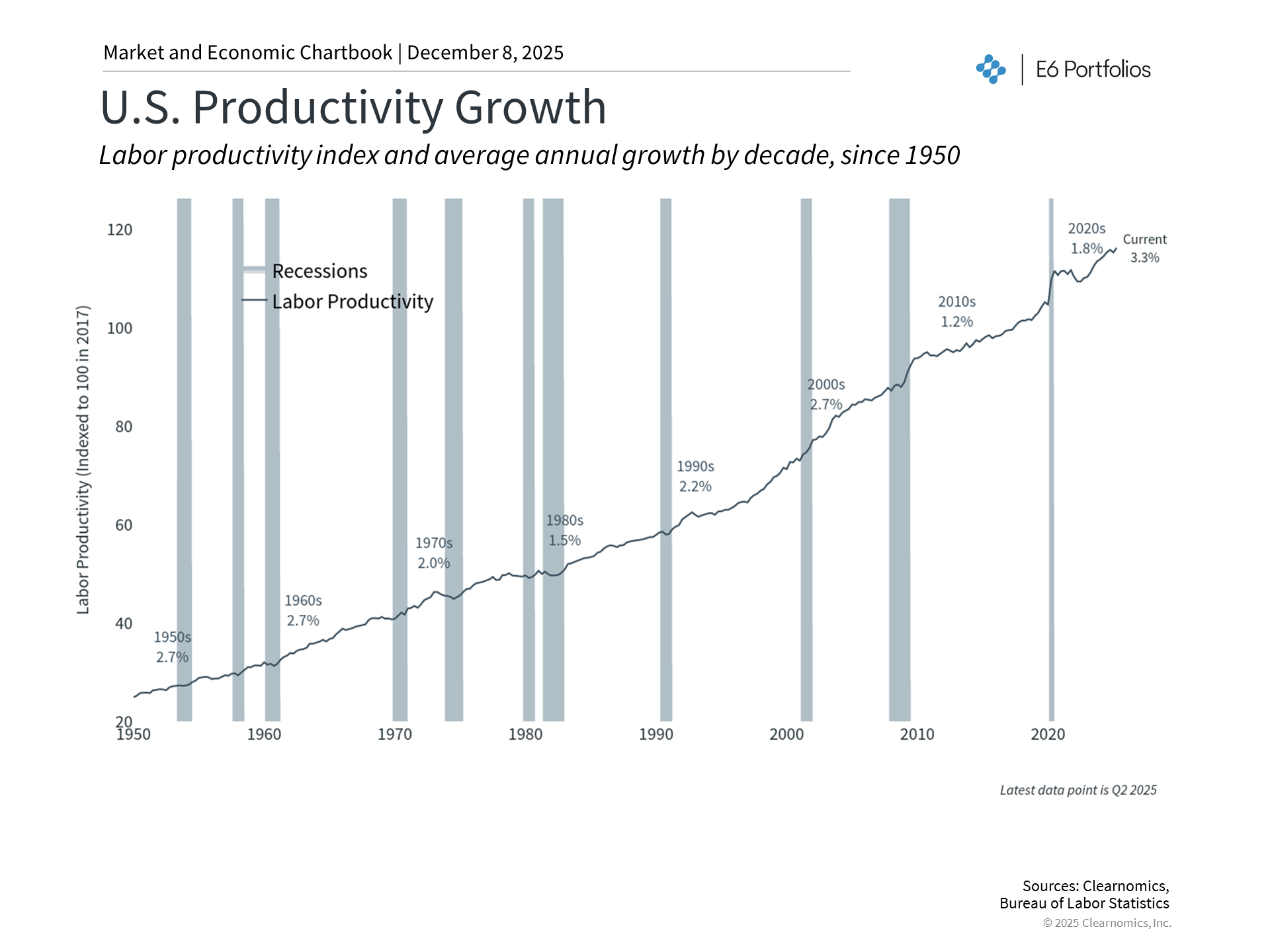
When it comes to long-term economic growth, the most important question is whether productivity will rise due to technological advances. Productivity measures how much a worker can produce in a given amount of time. The hope is that AI and new technologies will boost worker output, which can support profit margins and help both the economy and investor portfolios.
5. Tariffs remain a wild card
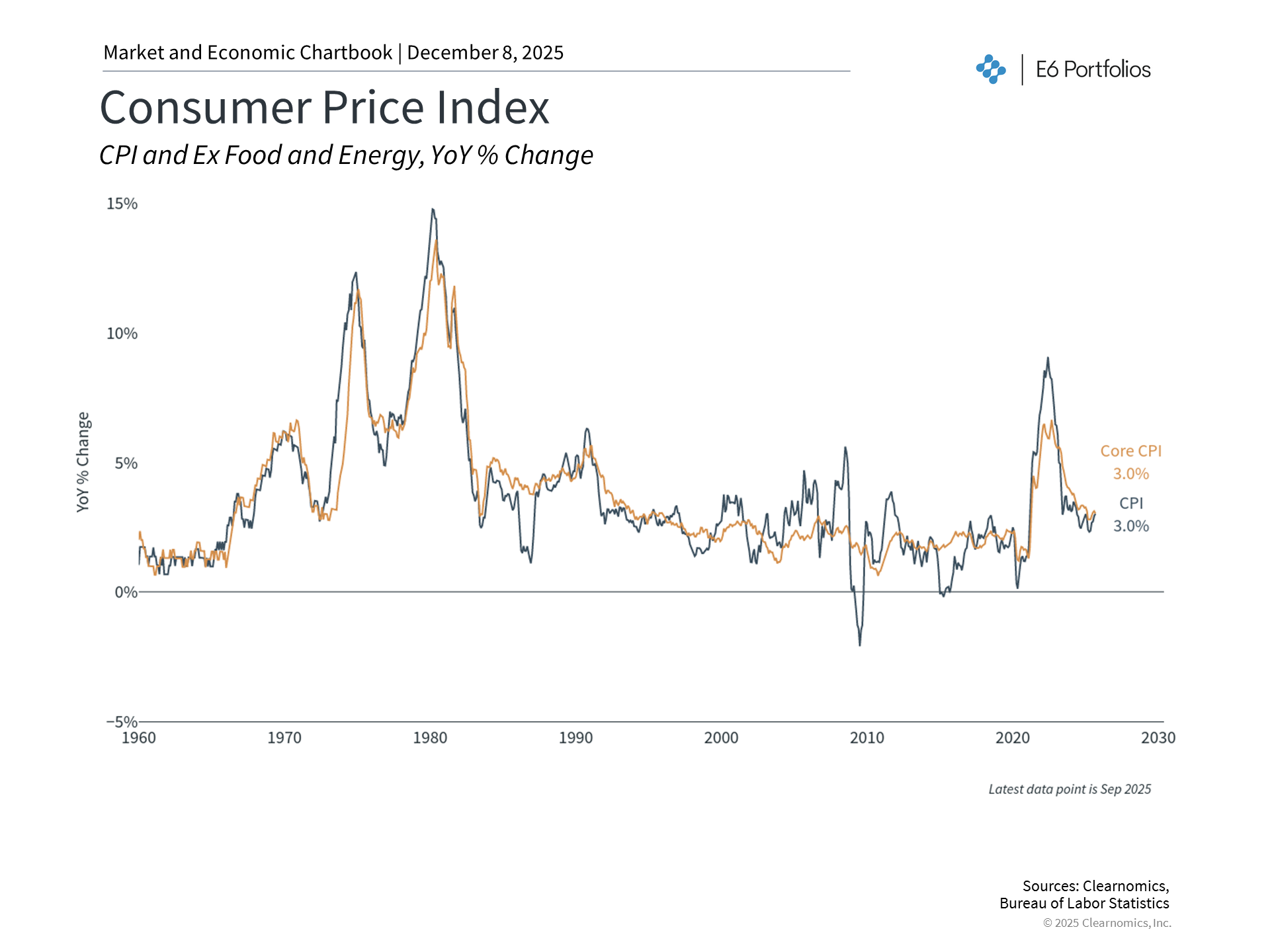 |
While tariffs were the primary driver of stock market swings in 2025, their economic effects have been mixed. Despite tariff costs increasing significantly, measures of inflation have ticked up only slightly. This is partly because many tariffs were quickly paused or scaled back, and many companies absorbed the costs rather than immediately raising prices.
For long-term investors, these developments highlight that tariffs are part of the government's policy toolkit. Rather than viewing them as a major shift, they represent tools for achieving broader policy goals. While tariffs aren't going away, their impact on day-to-day market activity could diminish.
6. Elections and government debt are in focus
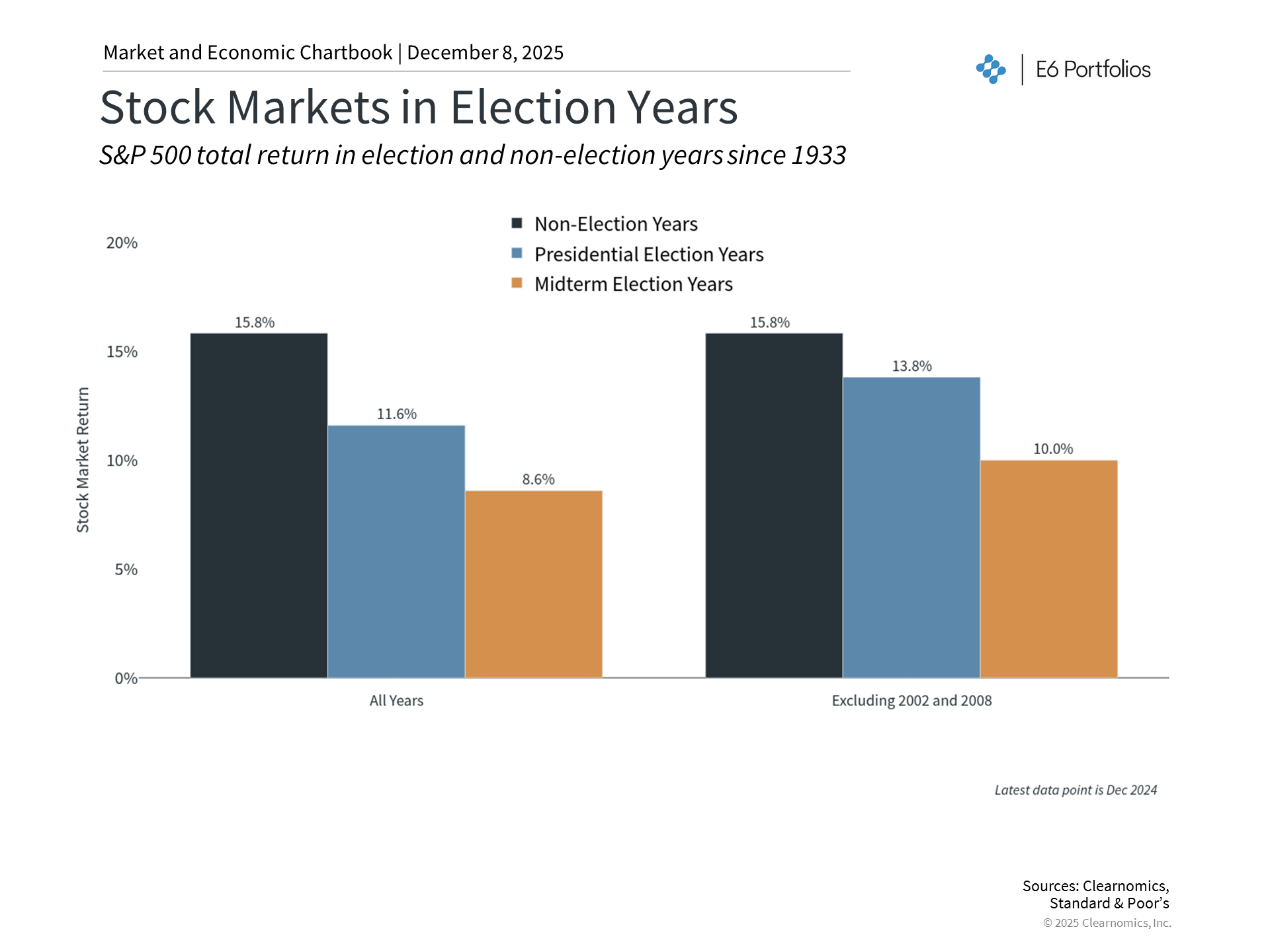 |
In 2026, investors will likely pay attention to the midterm election and what it could mean for policies. The chart shows that midterm election years have historically experienced healthy returns, averaging 8.6% since 1933.
Many investors are concerned about the growing national debt, which is around $36 trillion. However, the national debt has been a challenge for decades, yet investing based on these concerns would have resulted in missed opportunities. For long-term investors, it's important to focus on what you can control, such as understanding key tax changes and how they impact your personal financial planning.
7. The Federal Reserve continues to adjust policy
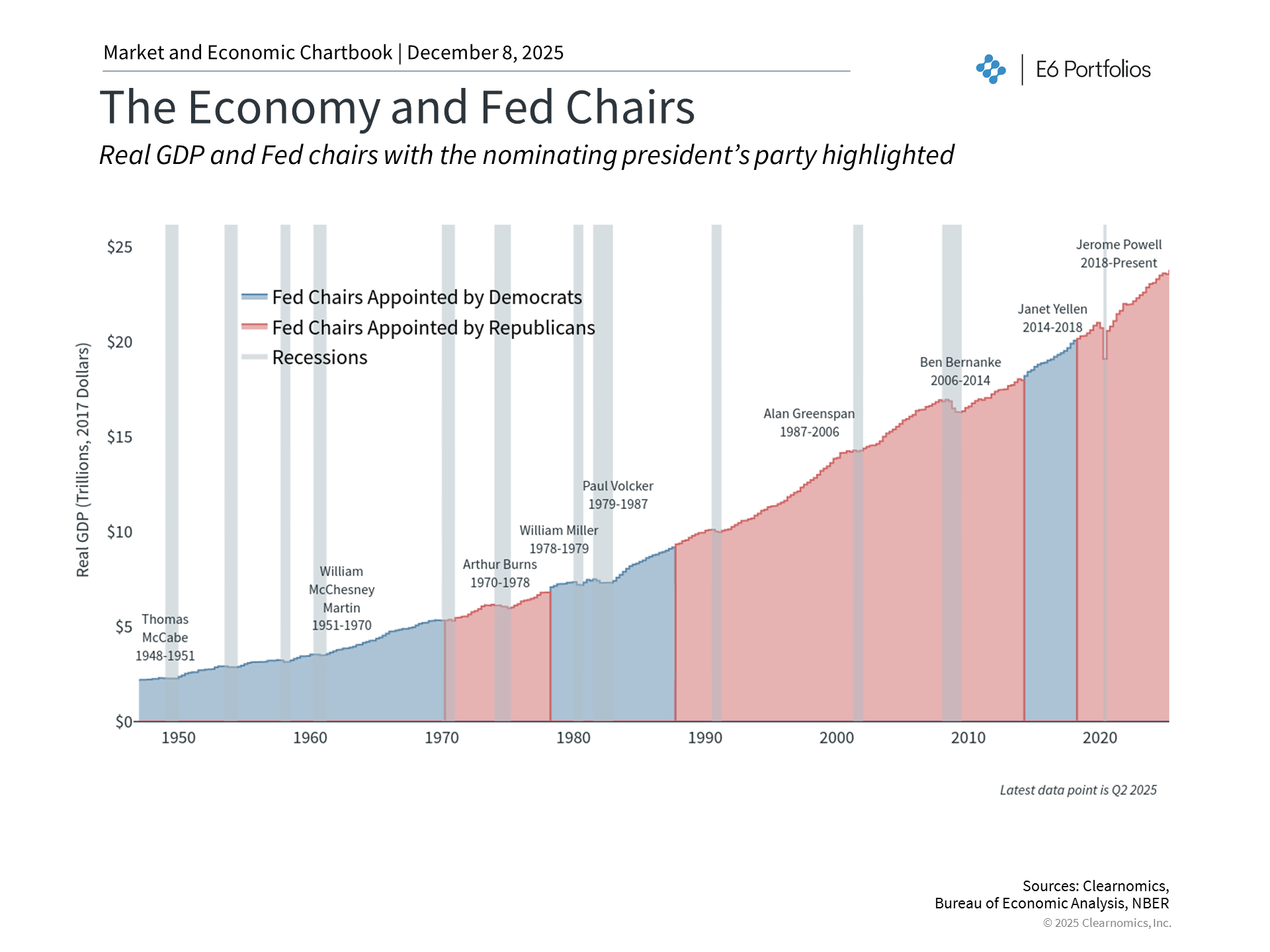 |
The Fed resumed cutting rates in September after pausing earlier in the year. As we enter 2026, the path of monetary policy (how the Fed manages interest rates) could become less certain. Fed Chair Jerome Powell's term will end on May 15, 2026, paving the way for new leadership.
The chart shows that the economy has performed well across Fed Chairs appointed by both parties. Rather than following the Fed's every move, investors should focus on longer-term trends like economic growth, inflation, and productivity to understand the impact on interest rates and bonds.
Looking ahead to 2026
As we enter 2026, investors face a familiar challenge: balancing concerns with the reality that markets have consistently rewarded patient, disciplined investors over time. History suggests that many feared events never materialize. What separates successful long-term investors is the ability to stay balanced throughout all phases of the market cycle.
The bottom line? Markets have delivered strong returns, but elevated valuations and slower global growth suggest more modest expectations for 2026. Rather than attempting to time the market, investors should focus on maintaining balanced portfolios positioned for various outcomes.
References
1. https://www.census.gov/hfp/btos/data_downloads
2. https://www.imf.org/en/publications/weo/issues/2025/10/14/world-economic-outlook-october-2025