The baseball player Yogi Berra once said that "a nickel ain't worth a dime anymore." Many investors may feel the same way today. Inflation has pushed everyday costs higher, and short-term interest rates have dropped over the past two years. This means that keeping too much money in cash can quietly reduce your wealth over time, as prices rise and the income from cash savings falls.
With money market fund assets near record highs at $7.9 trillion, many investors may be holding more cash than their financial plans actually require.1 Understanding the right role for cash in a portfolio is an important step toward building long-term financial security.
Managing cash requires careful planning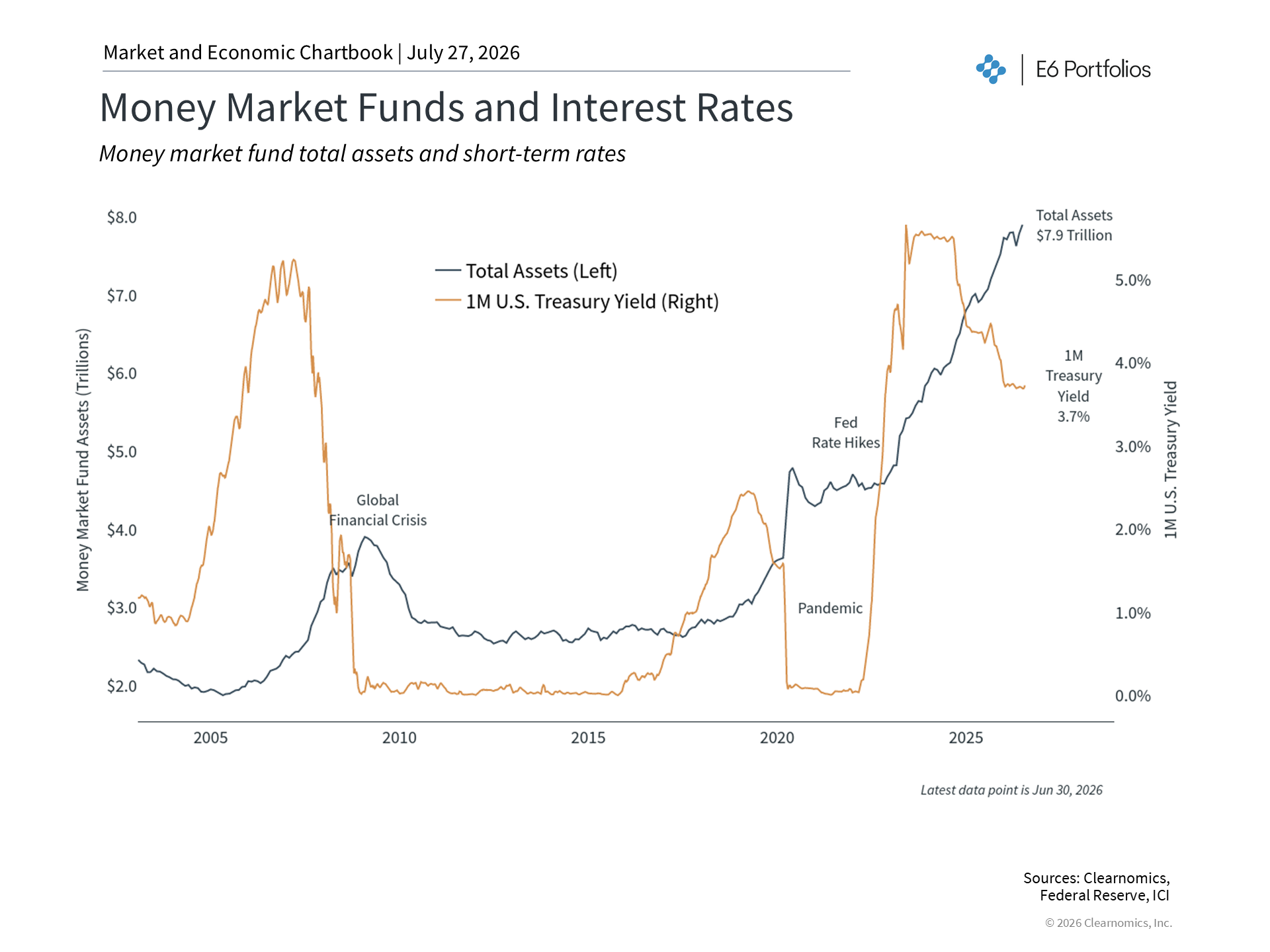 |
Cash serves many useful purposes. It covers near-term expenses, acts as an emergency fund, and can be set aside for goals like a home down payment or tuition. These are all valid reasons to hold some cash. The key question is how much cash is the right amount, given your personal goals and timeline.
Holding too much cash is sometimes called having "cash on the sidelines," because it is not growing, earning dividends, or receiving bond interest payments. As the chart above shows, money market fund assets climbed sharply when interest rates rose a few years ago. But because short-term rates can change quickly, the income from cash is not guaranteed to stay the same. This is known as "reinvestment risk." Investors who moved heavily into cash not only face lower yields today, but likely missed much of the broad market gains seen in recent years.
Inflation quietly erodes the value of cash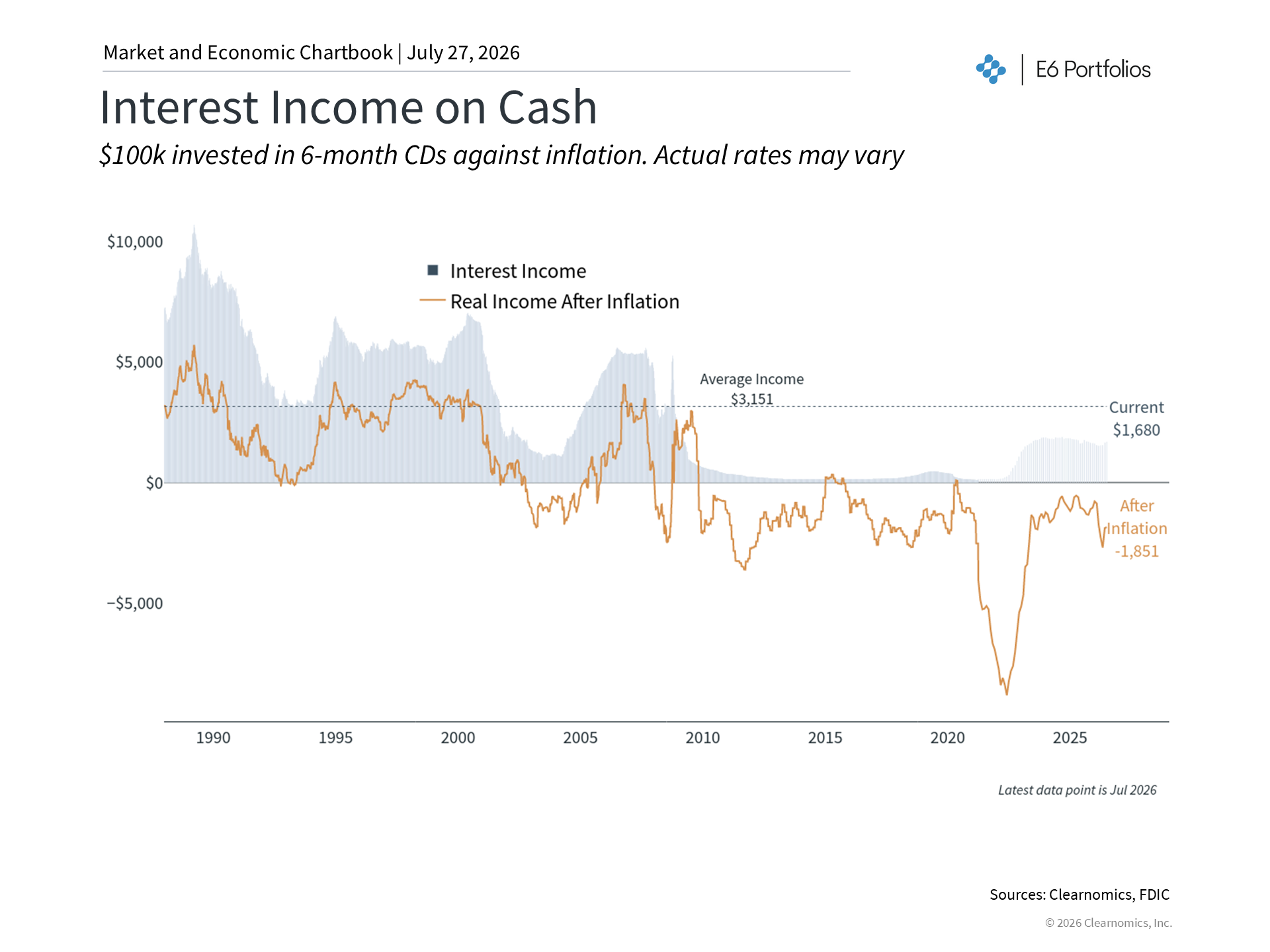 |
A common belief is that cash is completely risk-free. While a bank balance does not go up and down the way stock prices do, cash can still lose value in real terms. Inflation, which is the general rise in prices over time, gradually reduces what your money can actually buy. As the chart above shows, the inflation-adjusted return on cash has been negative for most of the past two decades.2 Even when cash appeared to be earning some income, inflation was often outpacing it.
With headline inflation currently at 4.2% and the one-month Treasury yield at 3.7%, real cash yields (meaning returns after accounting for inflation) remain negative today by many measures.3 This highlights why relying too heavily on cash can work against long-term financial goals.
Stocks and bonds support long-term growth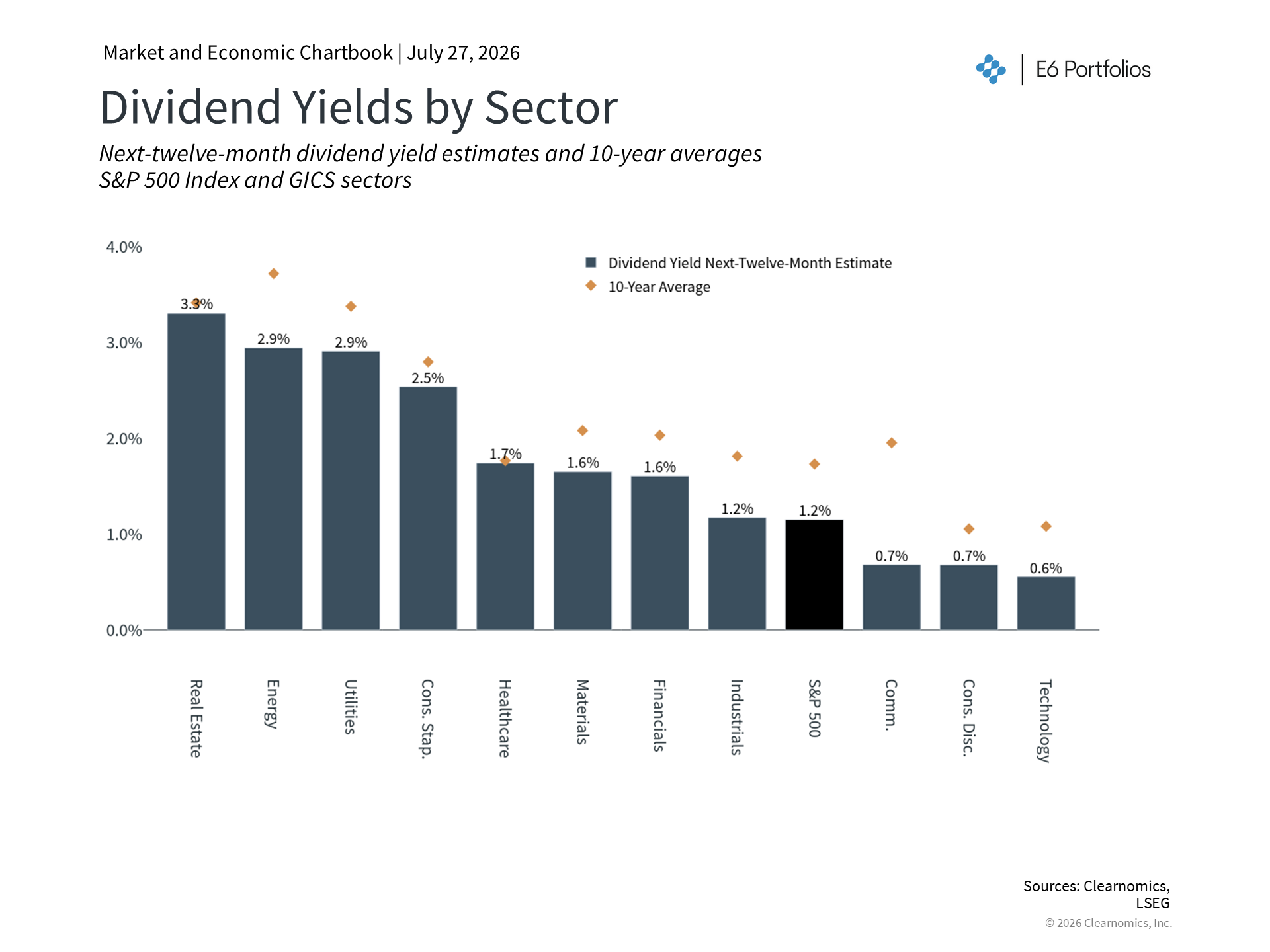 |
Stocks and bonds form the foundation of most long-term portfolios. Stocks can grow in value over time and may also pay dividends. Bonds pay regular interest and can help balance a portfolio when stocks are volatile. For example, the Bloomberg U.S. Aggregate Bond Index currently yields 4.8%, which is more than one and a half times its average since 2009. Investment grade corporate bonds (bonds issued by financially stable companies) yield 5.3% on average, compared to a historical average of 3.9%.
History shows that a well-diversified mix of stocks and bonds can outpace inflation and help investors reach their financial goals over time. This is not a reason to avoid cash entirely, but rather a reminder that cash works best when used for specific, short-term needs. For investors who have built up excess cash in recent years, putting it to work in a thoughtful, diversified portfolio is worth considering.
The bottom line? Cash plays an important role in financial planning, but holding too much comes with long-term trade-offs. Staying invested in a diversified portfolio of stocks and bonds remains the best way to work toward long-term financial goals.
References
1. https://www.ici.org/research/stats/mmf
2. https://www.fdic.gov/national-rates-and-rate-caps
3. https://home.treasury.gov/policy-issues/financing-the-government/interest-rate-statistics
Index Descriptions
S&P 500
The Standard & Poor's 500 Index is a capitalization-weighted index of 500 stocks designed to measure performance of the broad domestic economy through changes in the aggregate market value of 500 stocks representing all major industries.
Bloomberg US Aggregate Bond Index
The Bloomberg U.S. Aggregate Bond Index is an index of the U.S. investment-grade fixed-rate bond market, including both government and corporate bonds.