A famous investor named Jack Bogle once said that successful investing means "owning businesses and reaping the huge rewards provided by the dividends and earnings growth of our nation's—and, for that matter, the world's—corporations." This advice matters today because stocks can make money for you in two ways: the stock price can go up, and companies can pay you dividends (regular cash payments) as they earn more profits.
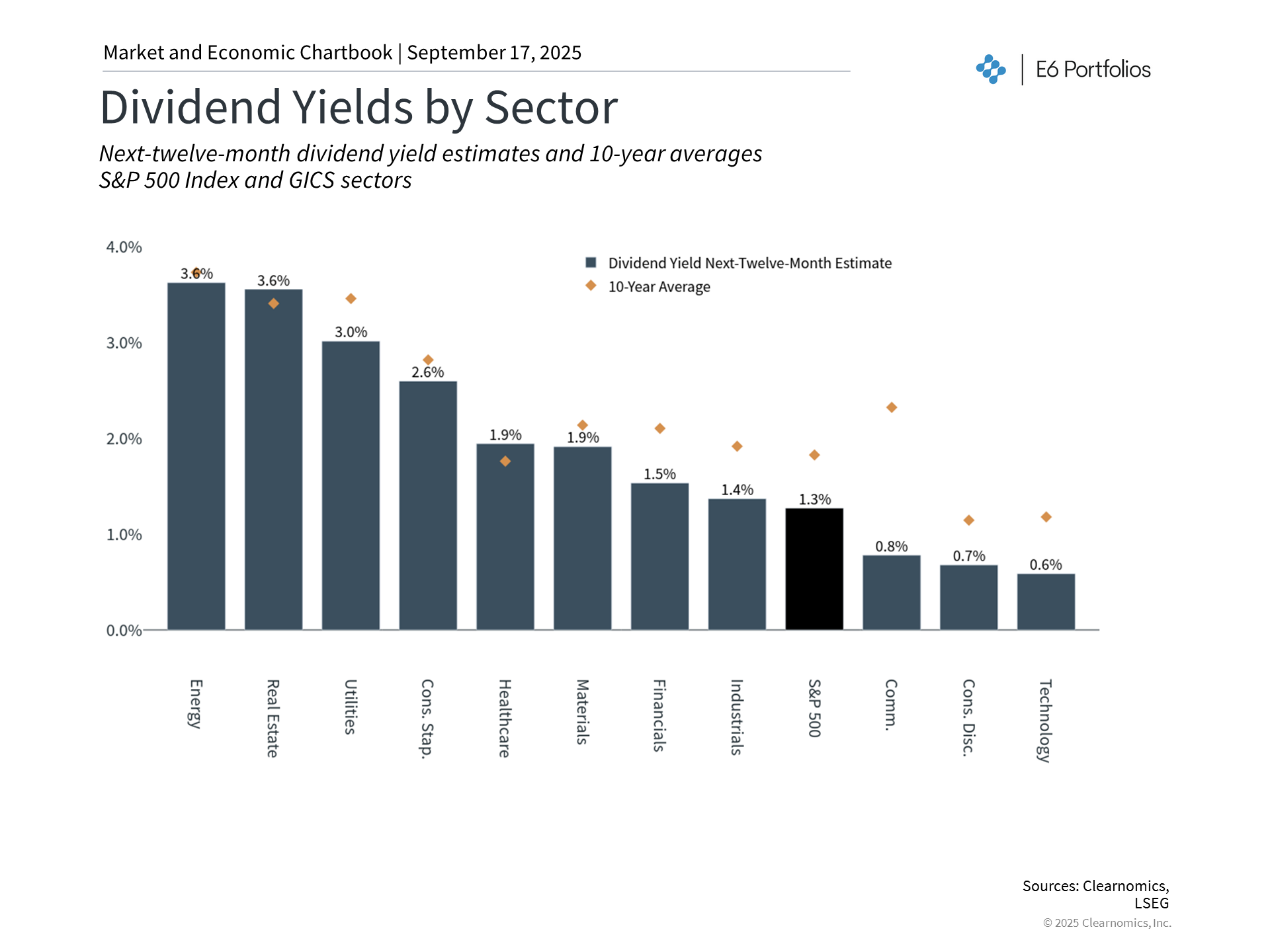
Right now, stock prices are near all-time highs but dividend yields (the percentage of income you get from dividends) are very low at just 1.3% for the S&P 500. The last time dividends were this low was in 2000 during the dot-com bubble. The Federal Reserve's decisions about interest rates also affect how investors can earn income from their investments.
Many people think dividends are boring compared to exciting growth stocks. But dividends shouldn't be ignored. They add up over time and give you steady income, especially when stock prices jump around a lot. Companies that pay dividends and also see their stock prices rise can give investors both regular cash and long-term wealth growth.
How people think about dividends has changed over time
 |
For most of the 1900s, dividends were a main way people made money from stocks. Dividend yields were often 5% to 7%. People bought stocks like they buy bonds today - mainly for the income. Companies were expected to pay and grow their dividends to show they were financially healthy.
This changed as investors became more interested in technology companies and growth. During the 1990s dot-com boom, high-growth tech companies often didn't pay dividends at all. Instead, they put their money back into growing the business. Stock buybacks (when companies buy back their own shares) also became popular as a more tax-friendly way to return money to shareholders.
Today's low dividend yields show this change. Technology sectors like Information Technology and Consumer Discretionary offer the lowest dividend yields of 0.6% and 0.7%. These include the Magnificent 7 stocks, which generally pay low dividends or none at all. Meanwhile, sectors like Real Estate, Energy, and Utilities offer yields above 3%.
Company decisions and interest rates affect dividend attractiveness
 |
Companies can use their profits in two ways: reinvest in the business or pay dividends to shareholders. Companies should return cash to investors when they have enough money for good investment opportunities or when their business model is designed to generate income, like REITs (real estate investment trusts).
But dividends do more than just return extra cash. Many companies pay steady dividends to attract investors and show they're financially stable. Growing dividends over time signals that management is confident about future earnings.
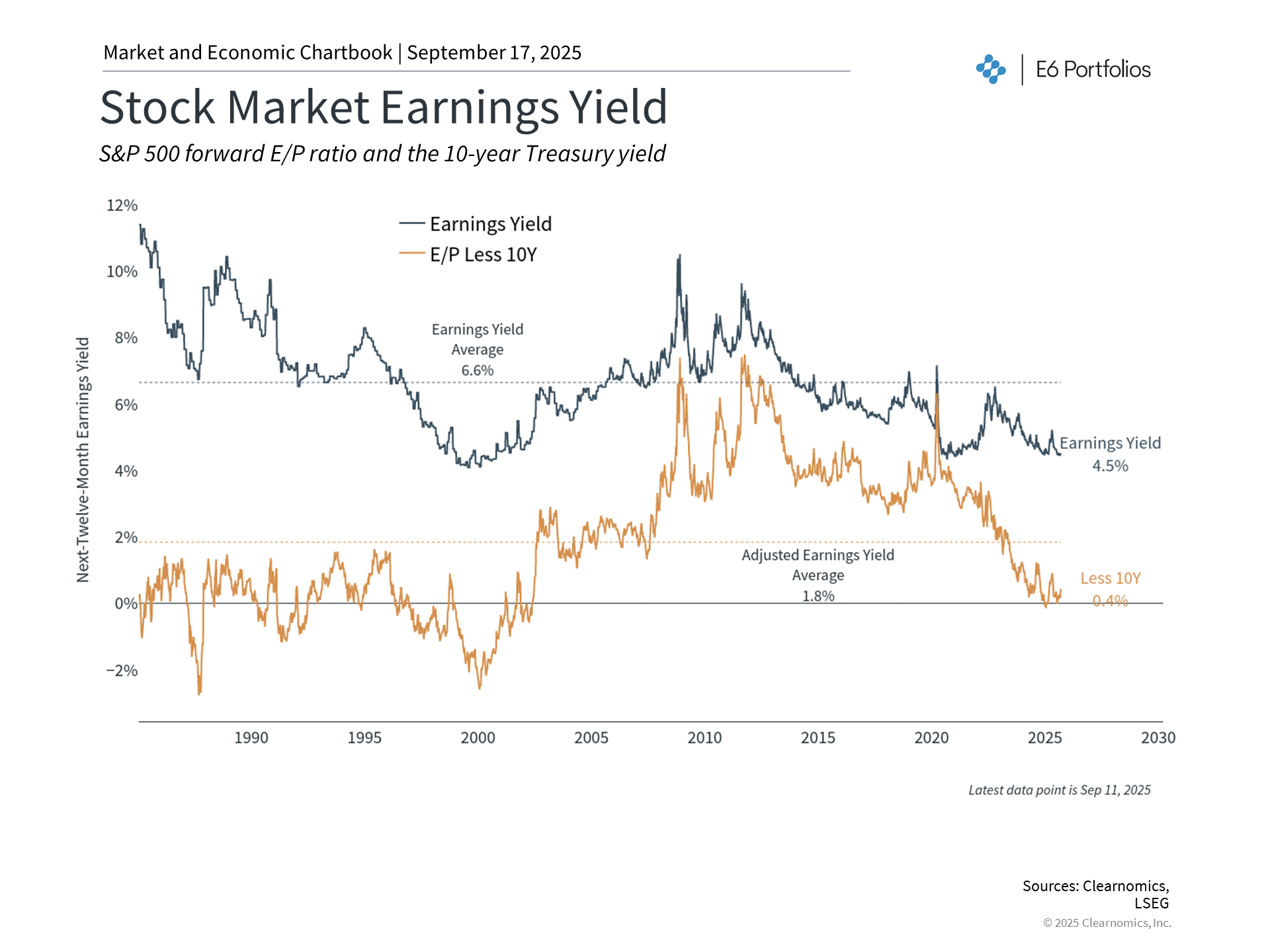
Interest rates also affect how attractive dividend-paying stocks are. When Treasury bond yields are higher than dividend yields, bonds become more appealing. Right now, 10-year Treasury bonds yield around 4.1%, much higher than most dividend stocks. As the Fed cuts rates, this could change and make dividend stocks more attractive.
Dividends matter for investors
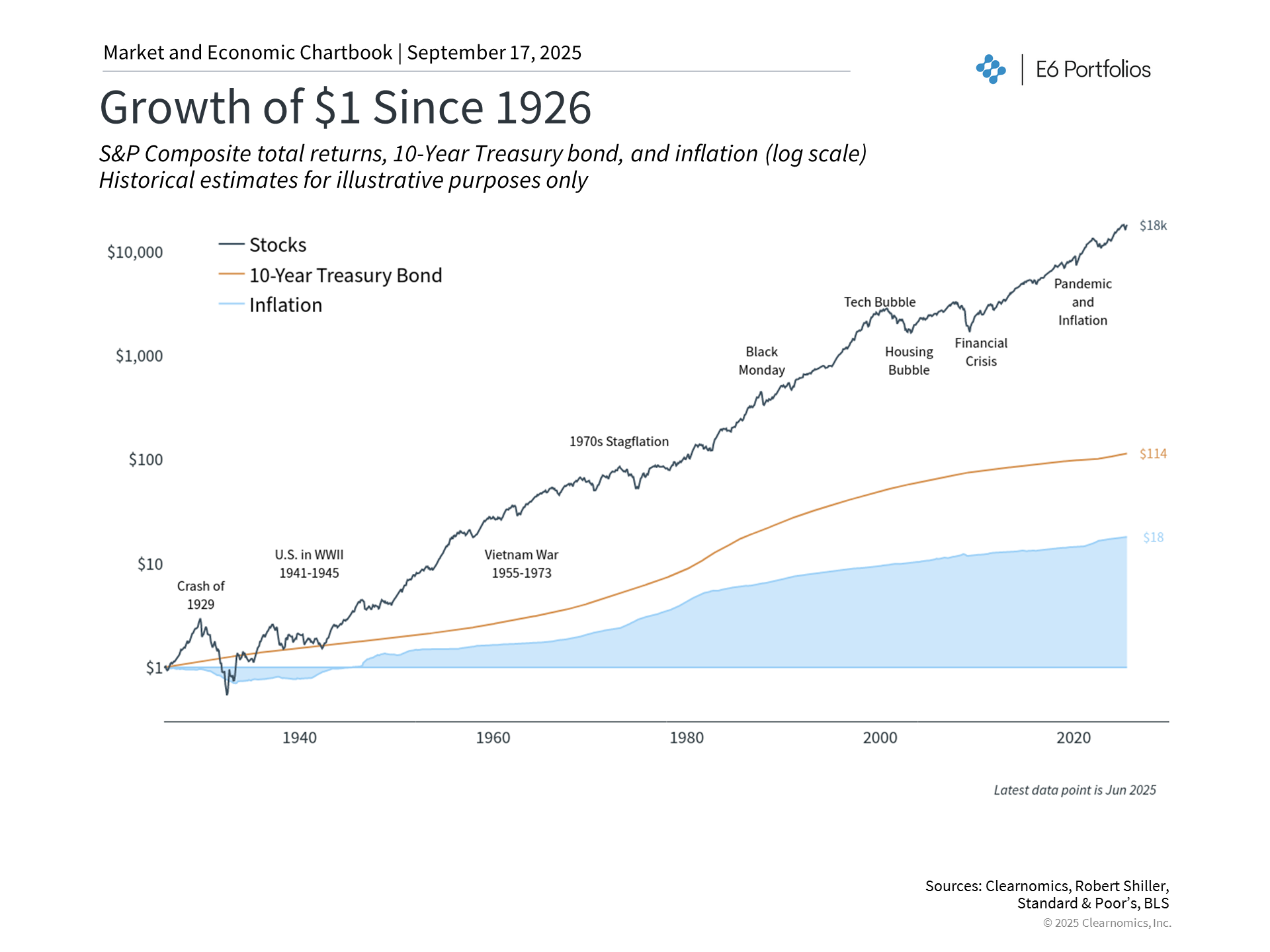 |
Dividends are an important part of total investment returns. Since 1926, dividends have provided 31% of the S&P 500's total return, while stock price increases provided 69%.1 Today, most investors focus on stock prices unless they need income, like people in retirement.
The chart shows that $1 invested in stocks in 1926 grew to about $18,000 by 2025. This growth came from both dividends and rising stock prices. Sometimes dividends provided most of the return, other times stock price growth dominated. The key was staying invested through different market cycles.
For people approaching retirement, generating current income becomes more important. But this doesn't mean focusing only on high-dividend stocks. "Yield chasing" (only buying the highest-yielding investments) can lead to poor diversification and concentration in unsustainable companies.
Investors should find the right balance of dividends and growth for their goals. This "total return" approach helps ensure portfolios can perform well in different market conditions.
The bottom line? While dividend yields are near historic lows, they still play an important role in investment portfolios. Investors should focus on both stock price growth and dividends as they work toward their financial goals.
1. https://www.spglobal.com/spdji/en/documents/research/research-sp500-dividend-aristocrats.pdf