Recent stock market fluctuations have been largely driven by the ongoing conflict in Iran and rising oil prices, with Brent crude climbing back above $100 per barrel. This has prompted questions about whether elevated energy costs could simultaneously dampen economic growth and push inflation higher. These concerns compound existing issues, including the impact of artificial intelligence on established companies, broad market valuations, private credit, and the direction of Federal Reserve policy. Understandably, investors may find themselves questioning the resilience of their portfolios.
Author Alfred A. Montapert once observed, "do not confuse motion and progress." With markets reacting daily to global headlines, there can be a temptation to frequently adjust portfolios and financial plans. However, a fundamental principle of sound planning is that the heavy lifting should be completed well before uncertainty arrives. A thoughtfully constructed portfolio holds an appropriate combination of complementary asset classes that align with long-term financial objectives — one designed to endure a variety of market conditions without requiring constant revision.
That said, markets without a clear sense of direction can feel unsettling. During periods like these, maintaining a measured perspective amid a stream of negative headlines is essential. Keeping long-term goals in focus is more important than ever, particularly since disciplined saving and investing remain the most effective ways to grow wealth over time. With uncertainty persisting, what should investors keep in mind?
Market pullbacks are an unavoidable part of investing
 |
Equity markets have been choppy this year, with the S&P 500 sitting roughly 5% below its all-time high reached in January, as of mid-March. While recent market movements may unsettle some investors, pullbacks of this magnitude are entirely normal. In fact, the average year sees several declines of 5% or more spread across weeks or months before markets recover. In 2025, for instance, the S&P 500 experienced six such pullbacks driven primarily by tariffs, yet still delivered a total return of 18% for the year.
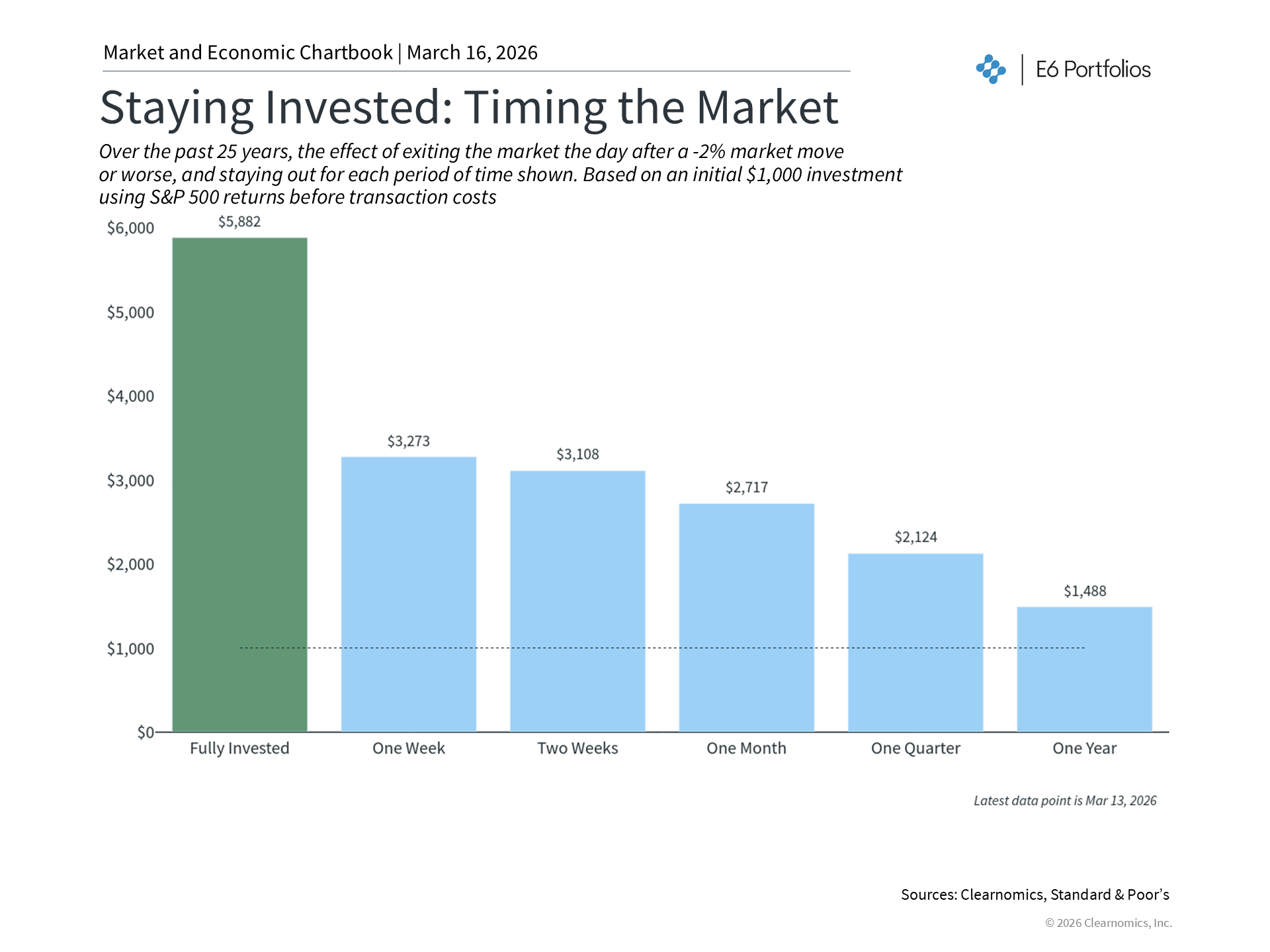
This illustrates the foundational case for staying invested as a long-term strategy. Some investors may be tempted to time the market, but the challenge lies not only in knowing when to exit, but also when to re-enter. The accompanying chart demonstrates that historically, even missing a single week following periods of volatility has had a negative impact on investment outcomes. This is largely because the market’s strongest days have tended to follow its weakest ones. Investors who moved to the sidelines often missed the very recoveries they were anticipating.
This is not to suggest that pullbacks are trivial or that markets always recover swiftly. Rather, pullbacks are a recurring feature of investing that should be anticipated and planned for, rather than reacted to in the moment.
Bond yields are attractive amid recent volatility
 |
Although the stock market tends to dominate financial headlines, the bond market plays an equally important role. Inflation expectations are a key driver of bond performance, and recent increases in oil prices have raised fresh questions. Compounding the uncertainty is the upcoming transition to a new Fed chair in May and speculation about whether the central bank might alter its rate path. At present, market-based measures anticipate only one rate cut by year-end.
Bonds are a core portfolio holding that frequently serve as a counterweight to stock market volatility. However, the Middle East conflict has also weighed on bonds, with the Bloomberg U.S. Aggregate Bond Index roughly flat year-to-date. The 10-year U.S. Treasury yield has moved back above 4.2%, having fallen as low as 3.9% when tensions in Iran first escalated.
Perspective is important here. Following their historic decline in 2022 — when inflation and interest rates rose sharply — bonds have contributed positively to portfolios, generating strong returns from 2023 through 2025. Since the trough in October 2022, the broad bond market has produced roughly 20% in total returns, with certain individual sectors performing even better.
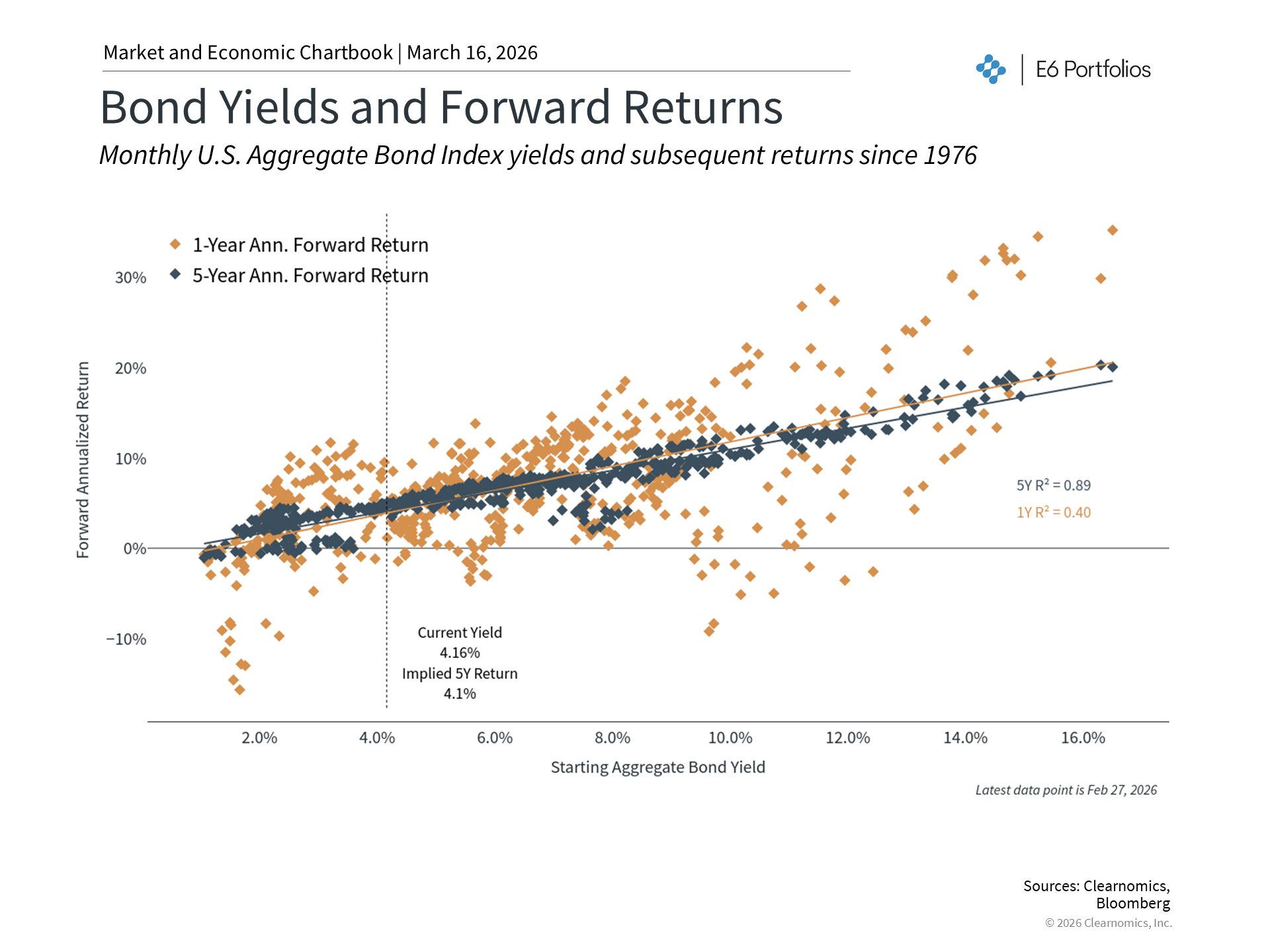
For long-term investors, current bond yields remain compelling relative to the prior decade. The income potential on offer today was simply not available for much of the past ten years. The yield on the U.S. Aggregate Bond Index currently stands at 4.5%, well above the 2.9% average recorded since 2009. As shown in the accompanying chart, investing when yields are elevated has historically been associated with healthy total returns over time.
This is particularly notable when compared to cash, where real yields — bond yields after adjusting for inflation — remain negative. On average, $10,000 invested in certificates of deposit yields approximately $155 per year, which falls well short of inflation running between 2.5% and 3%. For those in or approaching retirement, applicable inflation rates may be even higher due to medical and insurance expenses. While cash may feel secure, maintaining a proper allocation to bonds remains the most effective means of generating income and supporting long-run growth.
It is also worth noting growing concerns around private credit, with reports of rising redemption requests and some larger funds limiting withdrawals. At its core, private credit is an asset class made up of non-bank loans to companies. The sector has expanded significantly in recent years and is connected to areas of market uncertainty such as technology and energy. Unlike publicly traded bonds, private credit is structured as a long-term investment precisely because of this inherent uncertainty. As with any other asset class, what matters most for investors who hold private credit is whether it is appropriate for their portfolios and how it complements other holdings.
Having a portfolio perspective continues to benefit investors
 |
While each asset class presents its own set of considerations, the market environment of recent weeks underscores the value of a well-constructed portfolio. Holding a diverse mix of investments — spanning asset classes, specific sectors, and different regions of the world — can help smooth portfolio performance during turbulent periods, reducing the impulse to make abrupt changes that may undermine long-term financial plans.
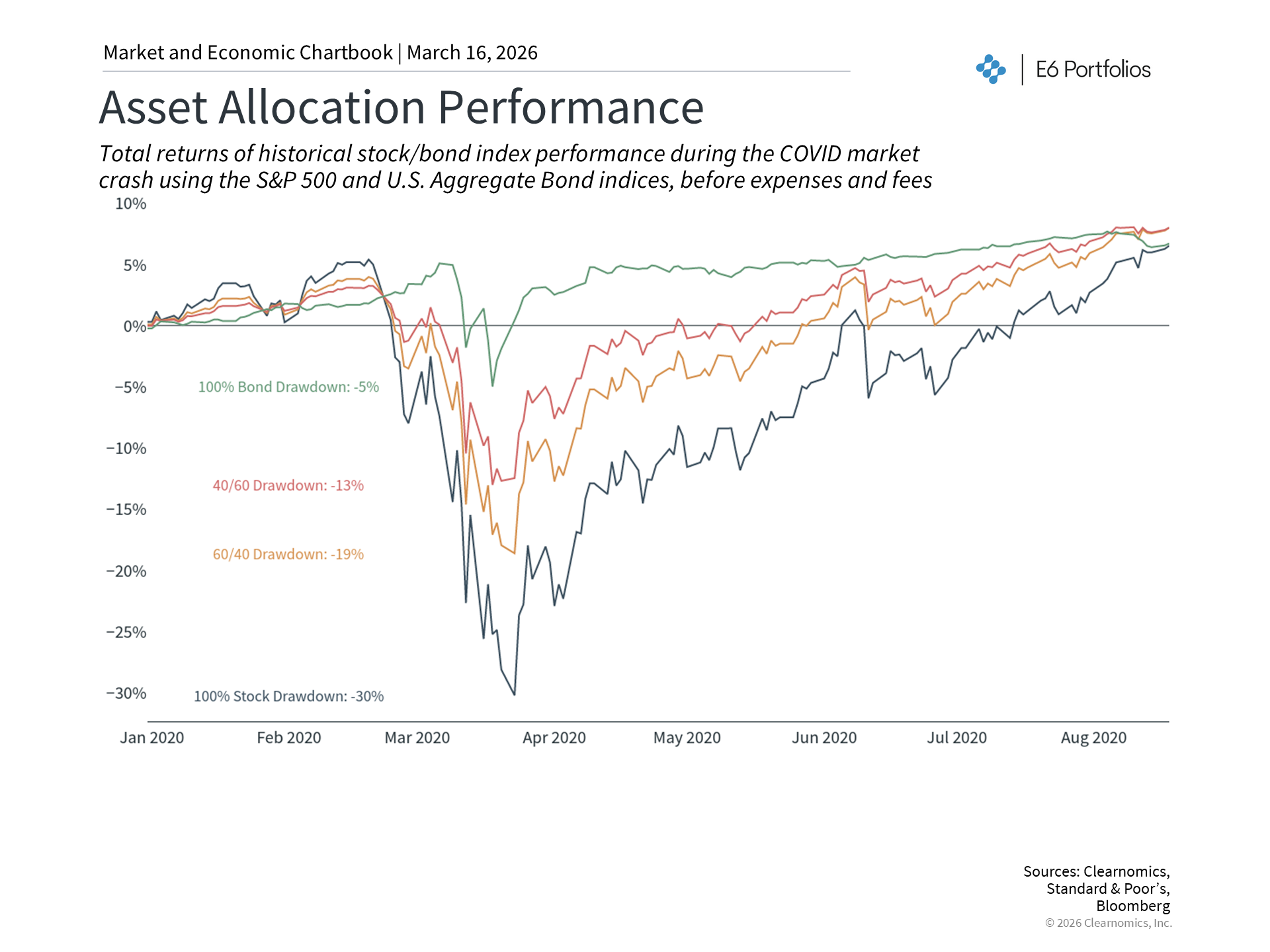
The accompanying chart highlights one of the most volatile periods in modern history: the onset of the pandemic in 2020. Different asset allocations responded in distinct ways, with more balanced portfolios experiencing notably smaller swings. While these portfolios ultimately converged to similar levels following this period, the real question is whether investors would have made reactive decisions when the stock market was down 20% or 30%.
Today, asset classes such as commodities are leading performance, supported by energy and precious metals. However, the goal is not to predict which asset class will outperform next and concentrate holdings accordingly. Rather, it is to benefit from the full breadth of market movements. When one segment of a portfolio faces headwinds, another may provide stability. Over time, this approach has enabled investors to participate in growth while managing risk — which is ultimately what achieving long-term financial goals demands.
The bottom line? Market volatility driven by oil prices and geopolitical uncertainty is uncomfortable but not unusual. Staying invested with a diversified portfolio remains the best way to turn short-term swings into long-term progress.