Nelson Mandela famously said that "education is the most powerful weapon which you can use to change the world." For many families, saving for a child's education is an important financial goal, but the cost of college has risen sharply over time. Grandparents often want to help pay for their grandchildren's education, partly because it creates a meaningful and lasting legacy.
In the past, grandparents had to be careful about how they gave money to grandchildren, especially because of rules around financial aid and taxes. A recent update to federal financial aid rules now excludes grandparent-owned 529 accounts (special tax-advantaged savings accounts designed for education costs) from the financial aid calculation. This removes a key downside that existed before, making these accounts worth a fresh look for families planning to fund education.
The rising cost of a college education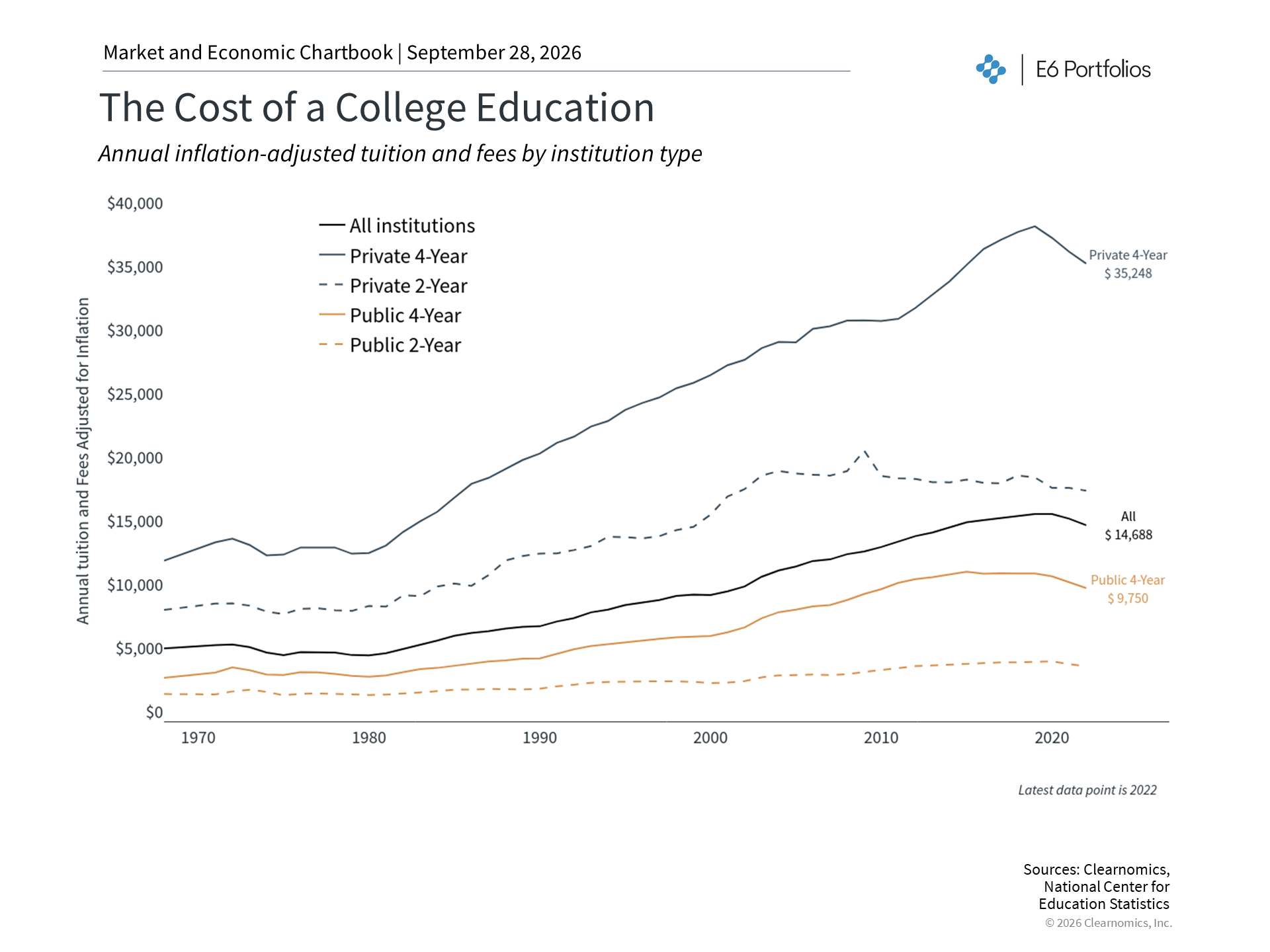 |
College is exciting, but it can also be a major financial burden. Tuition and fees have grown much faster than general inflation over the past 40 years. Beyond tuition, families also pay for housing, food, books, and transportation, which now average over $17,000 a year according to the College Board.1 These numbers highlight why starting to save early is so important.
Many families combine different sources of money to pay for college, including savings, scholarships, loans, and help from relatives. This is where grandparent-owned 529 accounts can be especially useful. While grandparents have always been able to open these accounts for grandchildren, distributions (withdrawals used to pay for college) were previously counted as student income on the FAFSA form, which is the federal application used to determine financial aid eligibility. That could reduce the amount of aid a student received.
Under the old rules, student income was counted at a rate of 50% when calculating the Student Aid Index (SAI), which is the number used to determine how much financial aid a student qualifies for.3 Now, grandparent-owned 529 withdrawals are no longer included in this calculation, making these accounts a much more attractive option.
Higher education can support a lasting legacy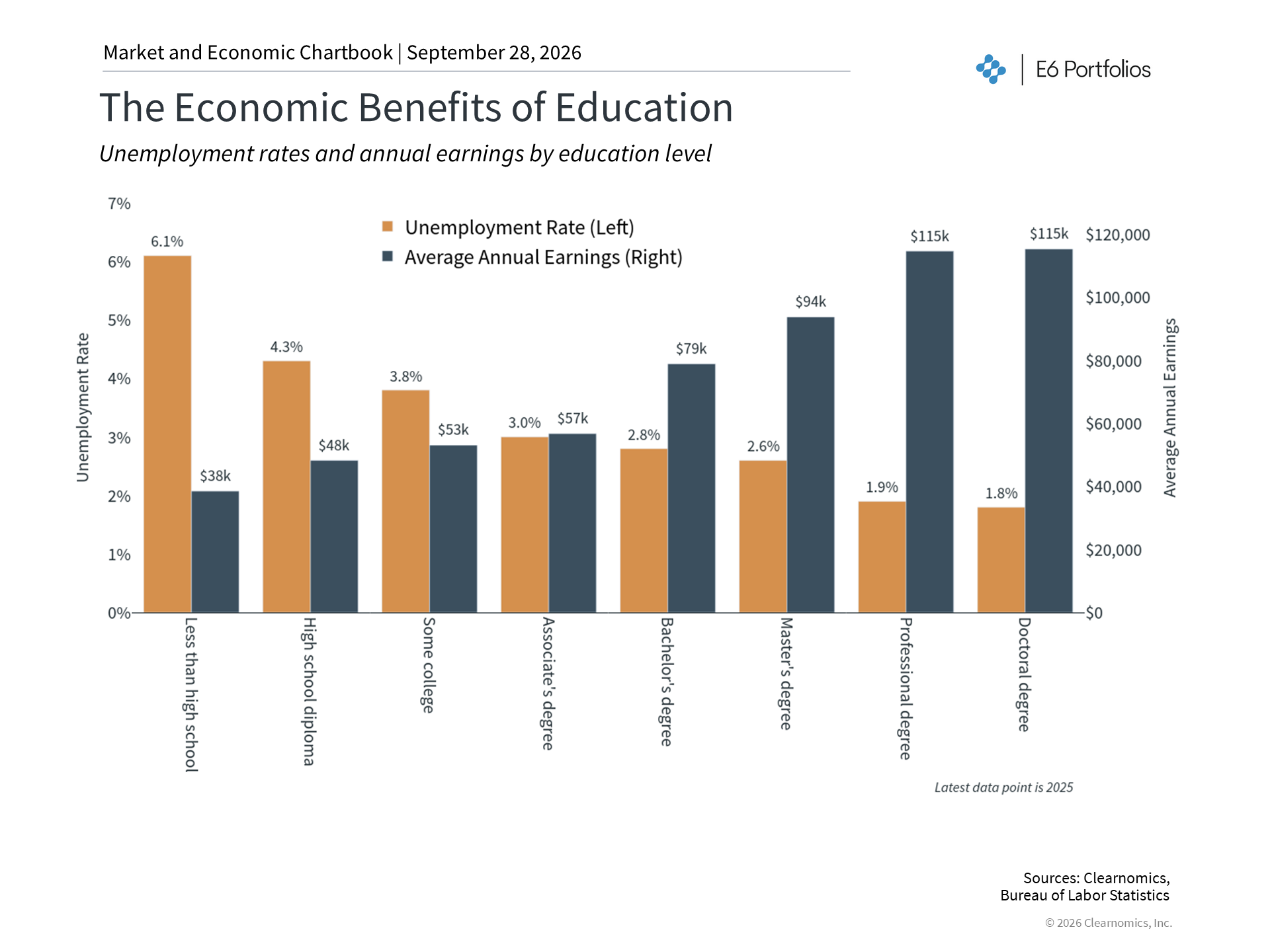 |
Despite the high costs, education still pays off. Data from the Bureau of Labor Statistics shows that people with more education tend to earn more and have lower unemployment rates. For example, those with only a high school diploma face an unemployment rate of 4.3%, while college graduates see just 2.8%, and those with professional or doctoral degrees see rates below 2%.4 Helping a grandchild get a strong education is a meaningful way to invest in their future.
One key benefit of grandparent-owned 529 accounts is that the grandparent keeps control of the money, including when to withdraw it and whether to change who benefits from it. This flexibility matters because plans can change. If a grandchild receives a scholarship or chooses a less expensive school, there are several options for unused funds. For example, the SECURE 2.0 Act allows up to $35,000 to be moved from a 529 account into a grandchild's Roth IRA (a type of retirement savings account) over their lifetime, free of taxes and penalties, as long as certain conditions are met.5 The account must have been open under the grandchild's name for at least 15 years, and standard Roth IRA contribution limits still apply.
These accounts also offer gifting benefits. For 2026, a grandparent can give up to $19,000 per grandchild each year without triggering federal gift tax reporting.7 Grandparents who want to give more can contribute up to five years of gifts at once, totaling up to $95,000, which gives the money more time to grow tax-free.8 Additionally, more than 30 states offer a state income tax deduction or credit for 529 contributions, adding another potential benefit depending on where the grandparent lives.9
Overall, 529 accounts can be a powerful tool for education planning when used thoughtfully. Grandparents can play a meaningful role in helping cover education costs in a tax-efficient way. That said, any contributions should be balanced carefully against a grandparent's own retirement needs and long-term financial goals.
The bottom line? Grandparents can leave a lasting legacy for their grandchildren in many different ways, including grandparent-owned 529 accounts. With careful planning, they can strategically invest in their grandchildren's future by helping with education costs using tax-efficient strategies.
References
1. https://research.collegeboard.org/media/pdf/Trends-in-College-Pricing-and-Student-Aid-2025-final_1.pdf
2. https://www.congress.gov/crs-product/R46909
3. https://www.congress.gov/crs-product/R48835
4. https://www.bls.gov/emp/
5. https://www.congress.gov/crs_external_products/R/HTML/R42807.html
6. https://www.irs.gov/taxtopics/tc313
7. https://www.irs.gov/faqs/interest-dividends-other-types-of-income/gifts-inheritances/gifts-inheritances-1
8. https://www.irs.gov/forms-pubs/about-form-709
9. https://www.irs.gov/newsroom/tax-benefits-for-education-information-center