Stock markets have done well in recent years, which is good news for investors. However, these strong gains can sometimes lead people to expect too much from their investments going forward. It's important to remember that investing happens in all types of markets—both good times and bad. Setting realistic expectations based on historical patterns and your personal financial plan is just as important as trying to grow your money.
Behavioral finance is the study of how people make investing decisions. Research shows that we all have natural tendencies that can lead to poor choices. The good news is that understanding these tendencies can help us make better decisions.
Don't focus only on what happened recently
 |
It's natural to focus on recent events when making investment decisions. This is called recency bias. The problem is that we might give too much weight to what just happened and forget about long-term patterns.
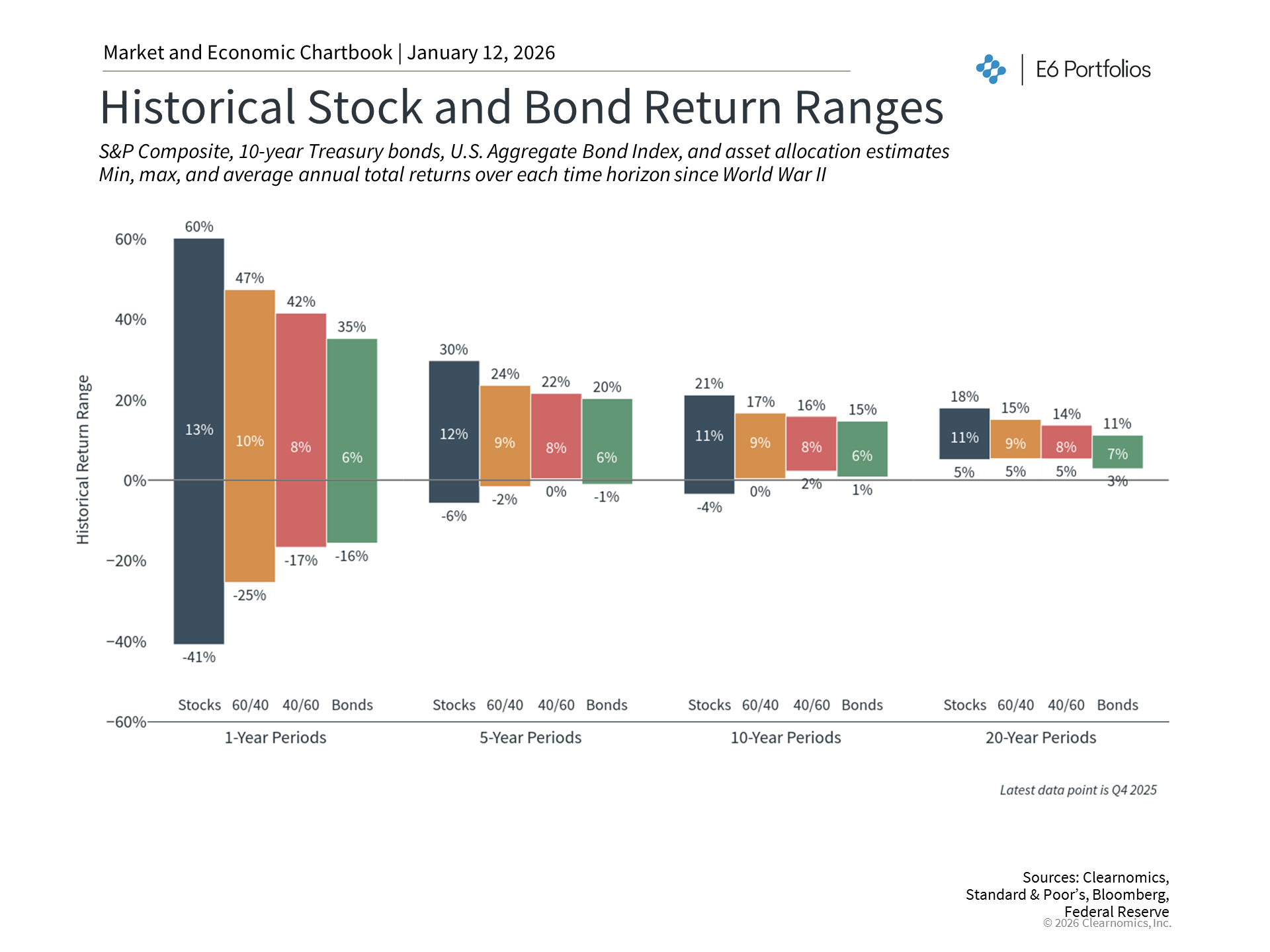
The S&P 500 (a stock market index that tracks 500 large U.S. companies) had double-digit gains in six of the past seven years. This might make people think these high returns are normal, when they're actually quite good. The chart shows that while stocks have averaged more than 10% per year over the long run, results in any single year can be very different. Instead of trying to predict what will happen next year, focus on the long-term positive trend.
The solution isn't to ignore recent performance. Instead, view it as part of a bigger picture. Strong returns are positive, but they should prompt you to review your portfolio to make sure it still matches your goals.
Understand how losses feel different than gains
 |
Research shows that people feel losses more strongly than gains of the same size. This is called loss aversion. For example, losing $100 feels worse than the happiness you get from gaining $100.
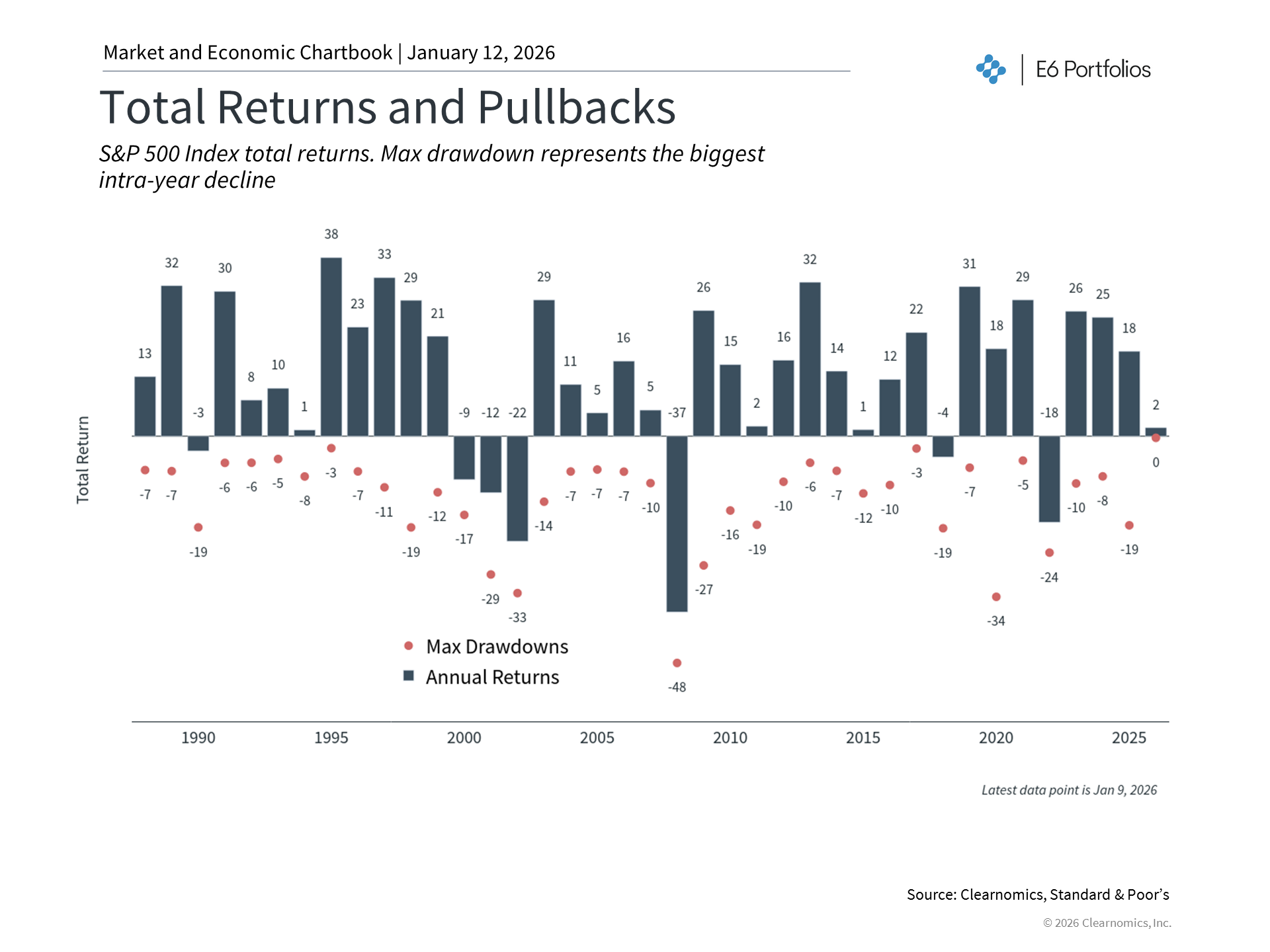
This matters because reaching your financial goals requires staying invested through both good and bad times. The chart shows that even though stocks rise in most years, they often experience temporary declines during the year. Those who sell during these declines often miss the recovery that follows.
Look for opportunities beyond U.S. stocks
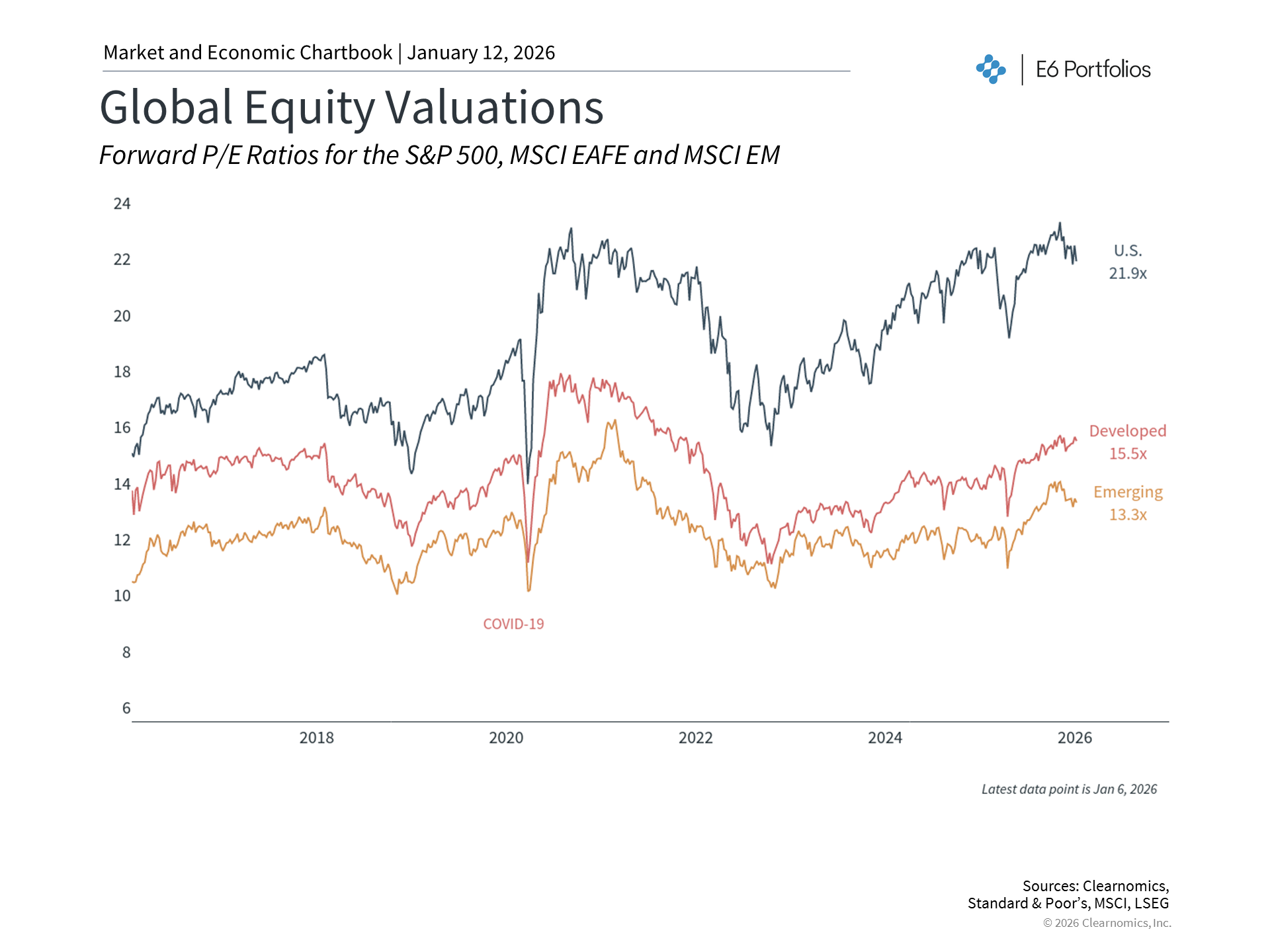 |
Many investors focus too much on stocks from their own country. This is called home country bias. While U.S. stocks have done well recently, other markets can also offer good opportunities. In 2025, international stocks in both developed and emerging markets outperformed U.S. stocks.
The chart shows that international stocks currently trade at lower prices compared to their earnings than U.S. stocks. This could make them attractive additions to a portfolio. Market leadership changes over time, so spreading investments across different regions can help create more consistent results.
The bottom line? After several years of strong returns, investors need to keep realistic expectations. History shows that stock markets support long-term growth, but this requires controlling emotional reactions to short-term events.