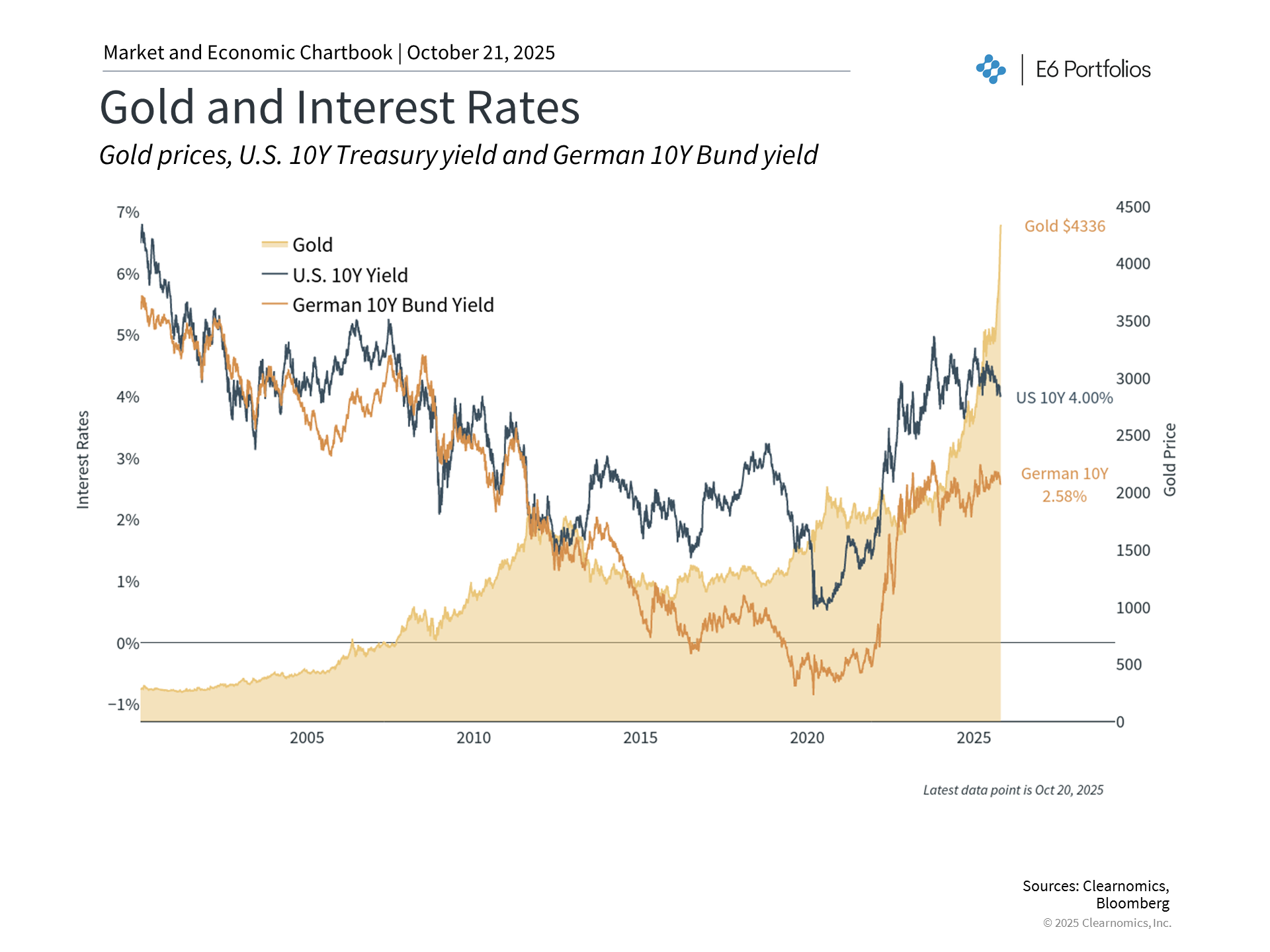
Gold prices have jumped more than 60% this year, climbing above $4,300 per ounce. Many investors are asking whether this rally is different from past increases in gold prices.
Some call this the "debasement trade." This refers to the idea that governments might weaken their money's value by spending more than they collect in taxes and keeping interest rates low. When the dollar weakens, some investors buy gold because they see it as a safe place to store value. This has become more popular as stock prices have become more unpredictable.
While concerns about government debt are real, history shows that predicting gold prices is hard. For long-term investors, the key question isn't whether to own stocks and bonds versus gold. Instead, it's about finding the right mix of different investments. It's also important to understand the difference between short-term trading and long-term investing, especially when an asset has already gone up a lot in price.
What is currency debasement?
 |
Currency debasement is an old concept that comes up every few years. Originally, it meant governments reducing the amount of precious metals in coins. This let them make more coins from the same amount of metal, but each coin was worth less.
Today, most money isn't backed by gold or silver. Modern currencies are called "fiat currencies" because their value comes from trust in the government that issues them. Now, debasement concerns are about whether governments will allow higher inflation (rising prices) and a weaker currency to make it easier to pay off their debts.
However, the evidence is mixed about whether this is happening now. Inflation has been stubborn but not extreme - most measures are at 3% or lower. The bond market also isn't expecting high inflation. The 10-year Treasury yield has dropped to 4% or less recently.
Two other factors matter. First, central banks worldwide have been buying gold to strengthen their reserves, partly due to global uncertainty and the weaker dollar. Second, while the dollar has fallen about 10% this year, it's still strong compared to the past twenty years.
Gold rallies are hard to predict
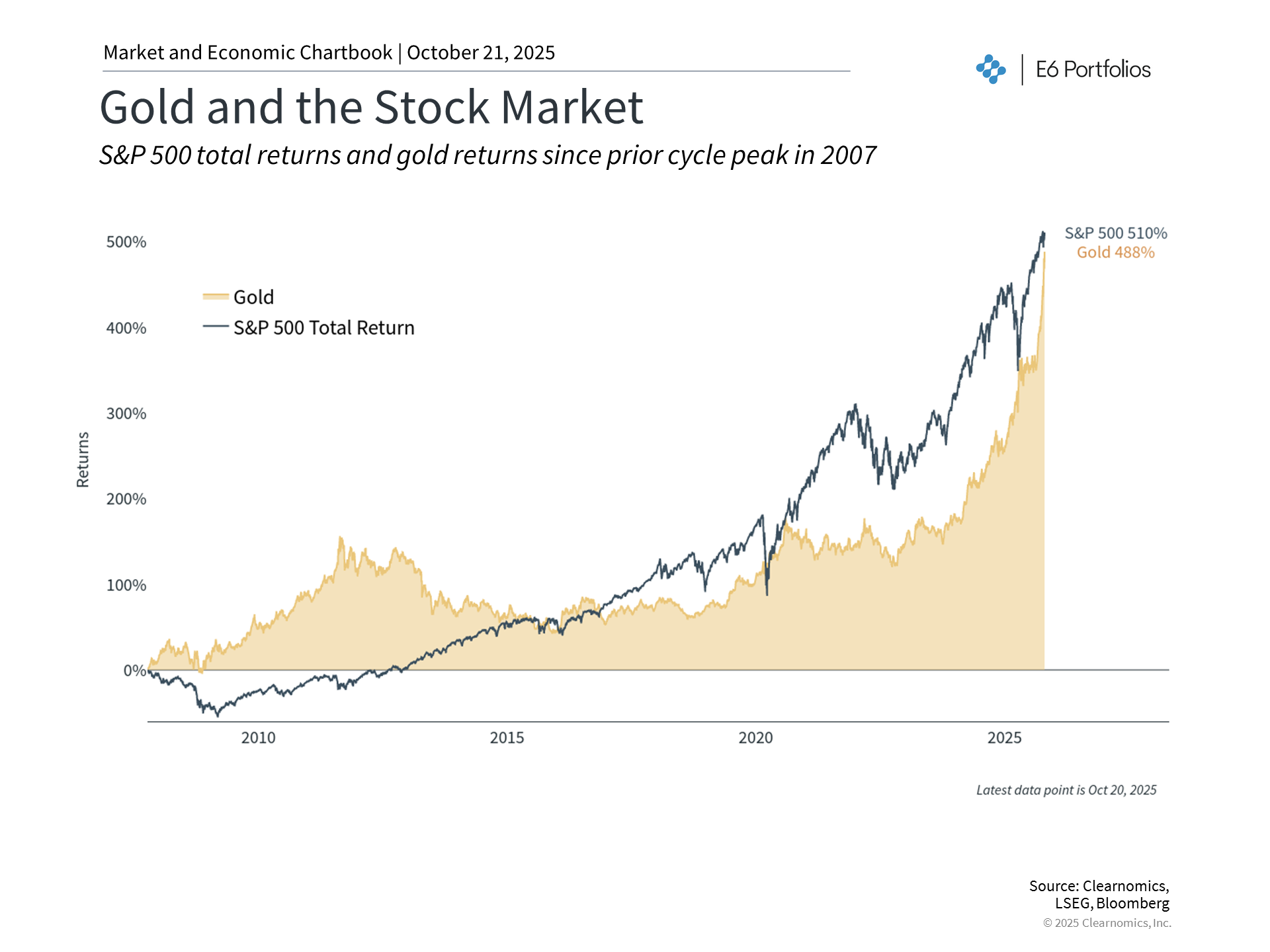 |
Gold has had dramatic price increases in the past with mixed results. In the late 1970s, gold surged above $800 - a level it didn't reach again until 2007. After the 2008 financial crisis, gold doubled from 2009 to 2011, reaching about $1,900 per ounce, before falling back toward $1,000.
The chart shows gold's performance compared to the S&P 500 since 2007. While gold has had strong periods, stocks have still done better over the full time period. This shows why it's important to think about all investments as part of a complete portfolio.
Many investments have done well this year
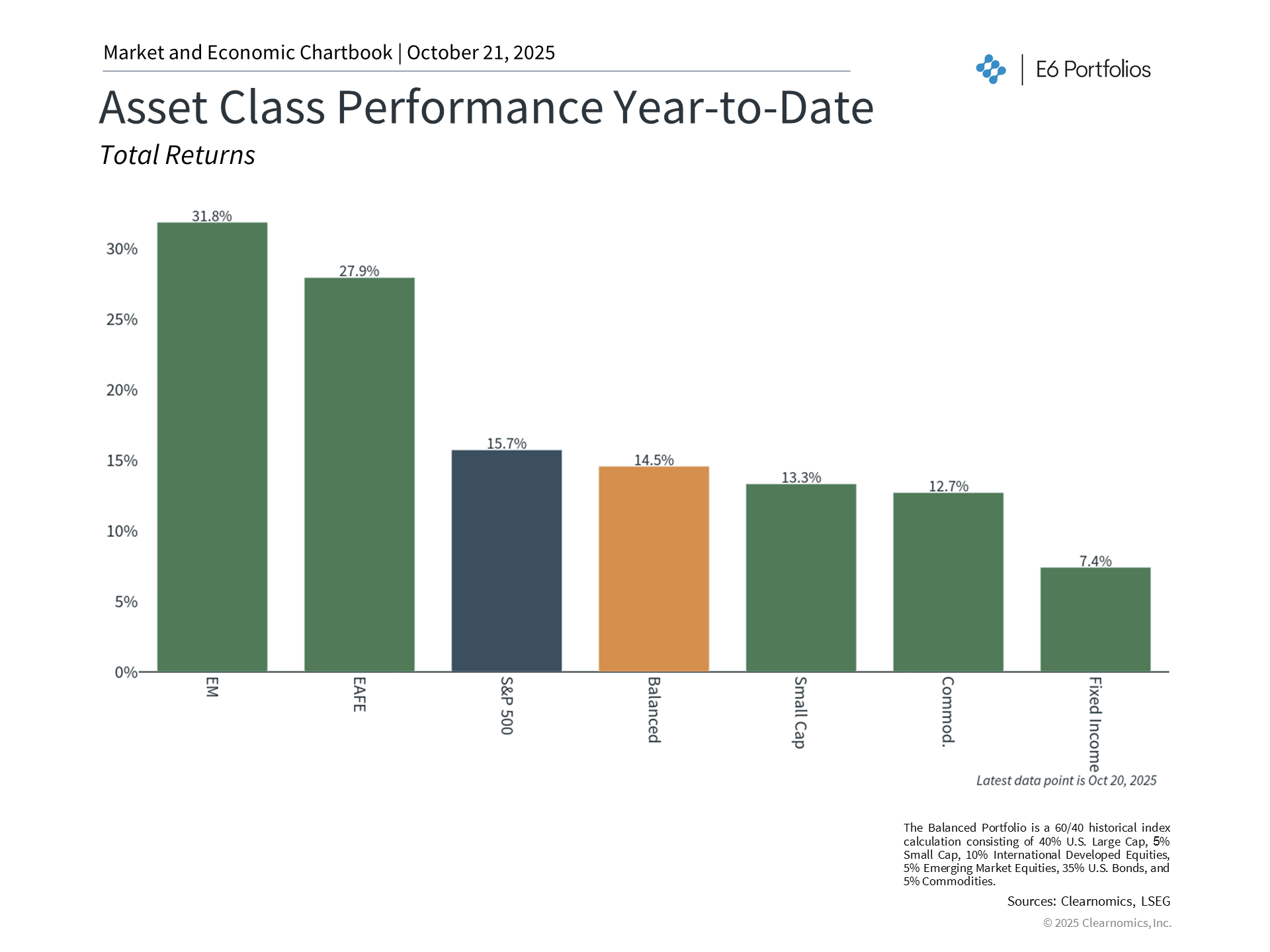 |
The current gold rally, which started in 2024, has happened alongside strong performance in many other investments. These include technology stocks like the Magnificent 7, international stocks, bonds, and cryptocurrencies. The chart shows that many different types of investments have contributed to portfolio returns this year.
For many investors, gold is part of a broader commodities investment strategy. Gold also has a key drawback - it doesn't generate income like bonds or dividend-paying stocks do. A portfolio with too much gold gives up the growth potential of stocks and the income from bonds.
The bottom line? While some investors worry about the dollar's value as gold prices rise, gold should be viewed as one part of a well-balanced portfolio that matches your long-term financial goals.