A former U.S. Senator named Max Baucus once said that "tax complexity itself is a kind of tax." This statement rings true every year, but it's especially relevant in 2026 because several major tax rule changes are creating new opportunities for financial planning. These changes affect everything from retirement savings for older workers to tax deductions that many people can claim. Learning about these new tax rules is important for making smart money decisions this year.
For many people who invest money, especially those over 50 with higher incomes, these changes mean they need to plan carefully early in the year. Instead of thinking about each tax rule change separately, smart investors can see them as chances to improve their financial strategies and make their long-term plans stronger.
Retirement catch-up savings now have new Roth rules
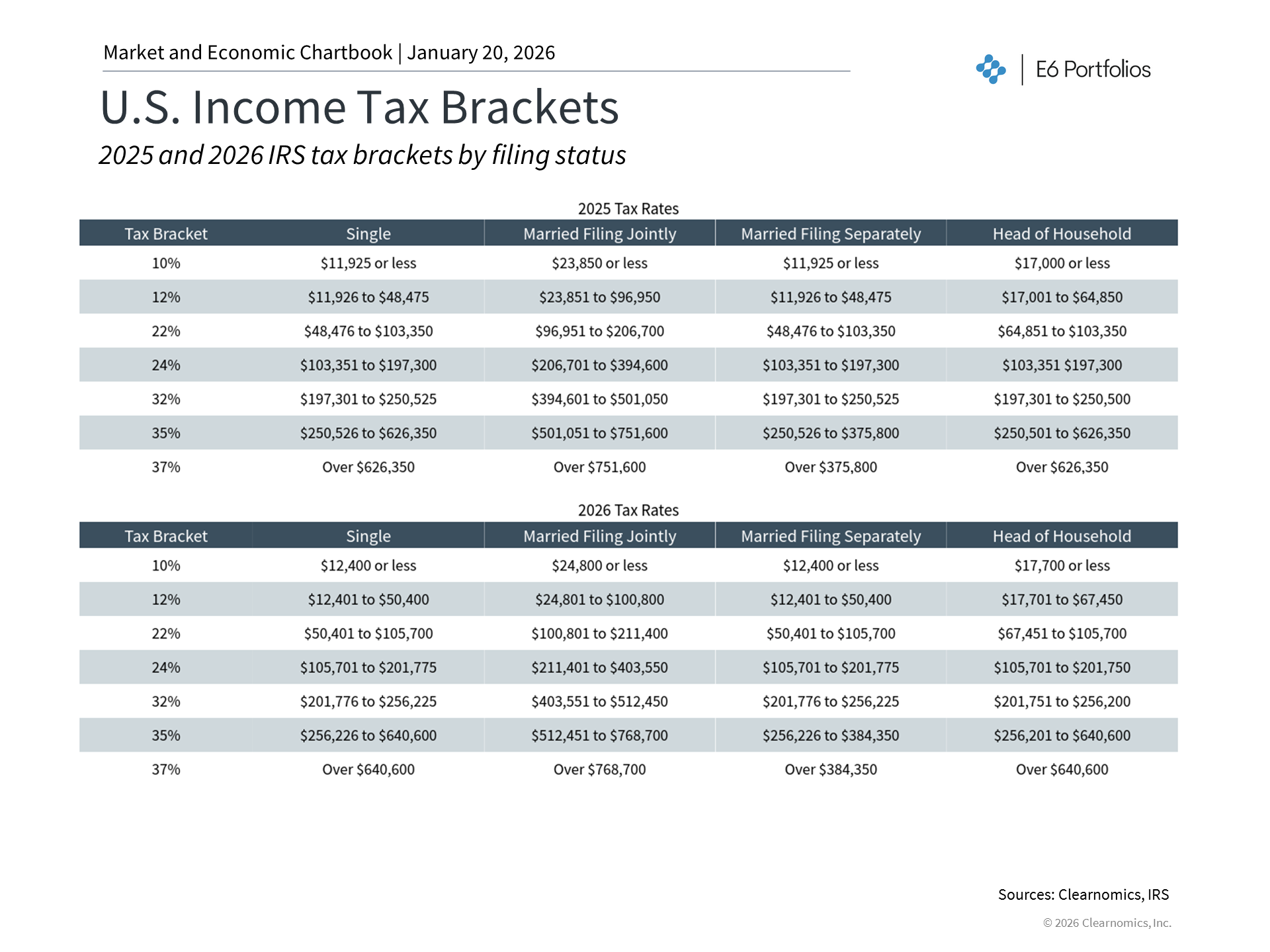 |
One of the biggest changes for people saving for retirement in 2026 involves catch-up contributions. This is a special feature that lets workers aged 50 and older save extra money beyond the normal limits to help boost their retirement savings. This is helpful for many people, like those who started saving late, need more money to retire comfortably, or had money problems earlier in life.
In the past, investors could choose between two types of contributions: pre-tax (which lowers your taxes now) and after-tax Roth (which gives you tax-free money in retirement). Starting in 2026, however, people who earn higher incomes face a new rule. Workers who earn $150,000 or more (measured by something called FICA wages, which is basically your paycheck) must now make all their catch-up contributions as Roth contributions. This means the money is invested after you've already paid taxes on it, but it will grow and can be taken out tax-free when you retire. The standard catch-up amount has gone up by $500 to $8,000 for people 50 and older, while the "super catch-up" for those aged 60-63 stays at $11,250.
Why does this rule matter? For high earners who used to rely on pre-tax catch-up contributions to lower the amount they owed in taxes today, this change could mean they'll have higher taxable income right now. For example, imagine a 55-year-old earning $150,000 per year who used to make a $7,500 pre-tax catch-up contribution. That contribution would have reduced their taxable income by $7,500. Now, that same contribution must be made after taxes have already been taken out, which increases the taxes they owe this year.
While Roth contributions do offer good benefits like tax-free growth and tax-free withdrawals in retirement, they don't lower your tax bill today. For people in their highest earning years who were counting on catch-up contributions to help manage what they owe in taxes right now, it's important to think about how this change affects their tax planning approach.
The SALT deduction cap has been raised a lot
Another major change is creating new opportunities for many taxpayers. The state and local tax deduction (called SALT) has been an important tax policy issue for years. It affects millions of Americans who pay significant amounts in state and local income taxes, property taxes, and sales taxes. The SALT deduction lets taxpayers reduce their federal taxable income by the amount they pay in state and local taxes. This basically prevents the government from taxing the same income at multiple levels.
The SALT deduction had been limited to $10,000 since a 2017 tax law was passed. Now it has been raised to $40,000 for tax year 2025 and $40,400 for tax year 2026, and it will increase by 1% each year through 2029 under a new law called the One Big Beautiful Bill Act (OBBBA). This change affects many Americans, but it's especially important for people living in high-tax states like California, New York, and New Jersey, where state and local taxes can easily go over the old $10,000 limit.
The higher limit makes it worthwhile for more households to itemize their deductions instead of taking the standard deduction. To understand why this matters, it helps to know how tax calculations work. Taxpayers can choose between taking the standard deduction (a set amount that everyone can claim) or itemizing their deductions (adding up specific expenses you can deduct). The standard deduction for 2026 is $16,100 for single people and $32,200 for married couples filing together. Itemized deductions include things like mortgage interest, charitable donations, medical expenses above a certain amount, and state and local taxes.
When the SALT cap was set at $10,000 in 2017, it greatly reduced the benefit of itemizing for many households. Combined with the doubling of the standard deduction at that time, the percentage of taxpayers who itemized dropped from about 30% before 2017 to just 10% in 2022 according to the Tax Policy Center.1 Now, with the SALT cap raised to $40,400 in tax year 2026, many more households may find that itemizing saves them money on taxes.
As a simple example, think about a married couple in California with $35,000 in state and local income tax, $8,000 in charitable giving, and $12,000 in mortgage interest. Under the old $10,000 SALT cap, their total itemized deductions would be $30,000 ($10,000 SALT cap plus their other deductions). Since this is less than the $32,200 standard deduction, this couple would not choose to itemize. Under the new 2026 rules, they can deduct the full $35,000 in state and local taxes, bringing their itemized deductions to $55,000 which reduces their taxable income by an additional $22,800.
How these changes affect Social Security and financial planning
The real challenge of tax planning isn't just understanding each change by itself, but also how they work together to affect your entire financial picture. This becomes even more complicated for retirees who are receiving Social Security benefits.
For example, the income thresholds that determine how much of your Social Security benefits are taxable haven't changed in many years. This means that any changes that increase your Adjusted Gross Income (AGI, which is basically your total income with some adjustments), such as the new Roth catch-up contribution rules, may cause more of your Social Security benefits to become taxable.
It's important to know that there is also a new "senior bonus" deduction available for the 2025 to 2028 tax years for people aged 65 and older. This is an extra $6,000 deduction for single filers or $12,000 for married couples, even if you itemize. However, this phases out (gradually disappears) for modified AGIs between $75,000 and $175,000 for single filers and between $150,000 and $250,000 for married couples filing together. This adds more complexity since decisions that increase your AGI could also reduce or eliminate this deduction.
The expanded SALT deduction also creates strategic opportunities, particularly for those who previously took the standard deduction. If you're now close to the point where itemizing makes sense, you might consider strategies such as bunching charitable contributions (giving multiple years' worth of donations in one year), prepaying property taxes where allowed, or timing other deductible expenses to get the most benefit. Of course, the right strategy will depend on your particular situation. However, it's important to remember that the increased SALT cap is temporary and scheduled to go back down to $10,000 in 2030, creating a limited time window to take advantage of higher deductions while they're available.
The bottom line? The tax situation for 2026 is complicated with multiple changes that affect households differently. Looking at these holistically, meaning as a complete picture, and planning accordingly, can increase the likelihood of financial success.
References
1. https://taxpolicycenter.org/briefing-book/what-are-itemized-deductions-and-who-claims-them