Since new tariffs (fees charged on imported goods) were announced last year, global trade has created uncertainty for financial markets. In February, the Supreme Court ruled that the original “Liberation Day” tariffs were illegal, meaning businesses that paid them are now receiving refunds.1 New tariffs have since been put in place under different laws, including on goods from close trading partners like Canada.
At the same time, these refunds have added to the federal budget deficit (the gap between what the government spends and what it collects), pushing the national debt above $40 trillion for the first time.2 Despite these concerns, markets have continued to perform well, with broad market indexes reaching new all-time highs. This is a reminder that it pays to keep these developments in perspective.
Tariff refunds are flowing back to businesses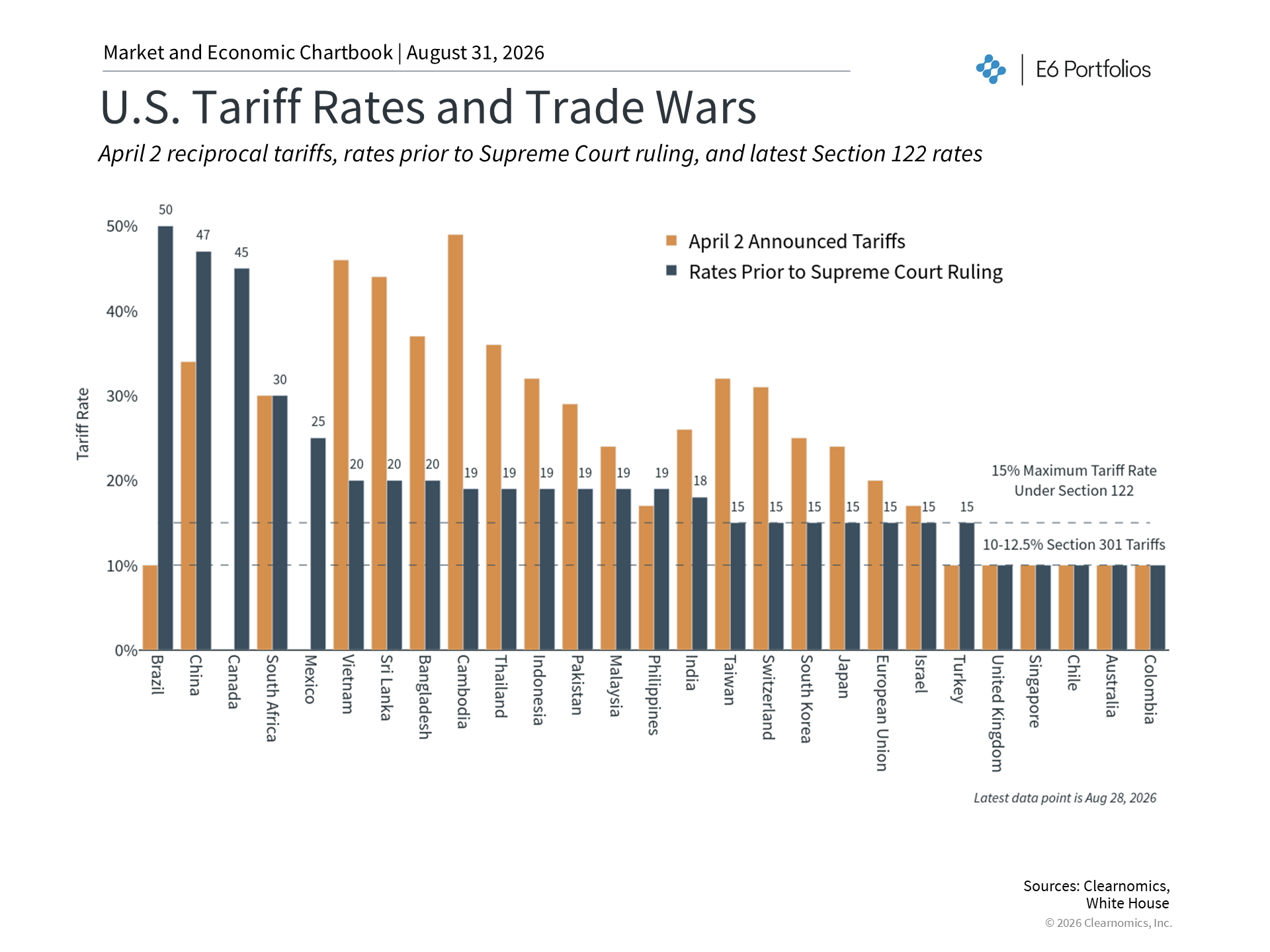 |
When the Supreme Court ruled in February that tariffs collected under a specific law (the International Emergency Economic Powers Act) were unlawfully imposed, markets reacted positively. Tariffs are generally seen as a cost passed on to consumers, so reversing them was viewed as good news for the economy.
Companies that paid those tariffs became eligible for refunds. According to U.S. Customs and Border Protection, $129 billion in refund claims had been accepted for processing.3 Since May, refunds paid out have exceeded new tariff collections, meaning the government has been paying out more than it is taking in for three months in a row.4 June saw the largest single month of tariff refunds ever recorded, with $49.2 billion returned compared to $23.6 billion collected. With roughly 40% of refunds still to be processed, this trend is likely to continue.
While these refunds may help company finances in the short term, they are largely a one-time event. They simply return money that businesses originally paid. Many companies also continue to pay tariffs under different laws, so this is not a permanent shift.
Tariff refunds have added to the federal deficit and national debt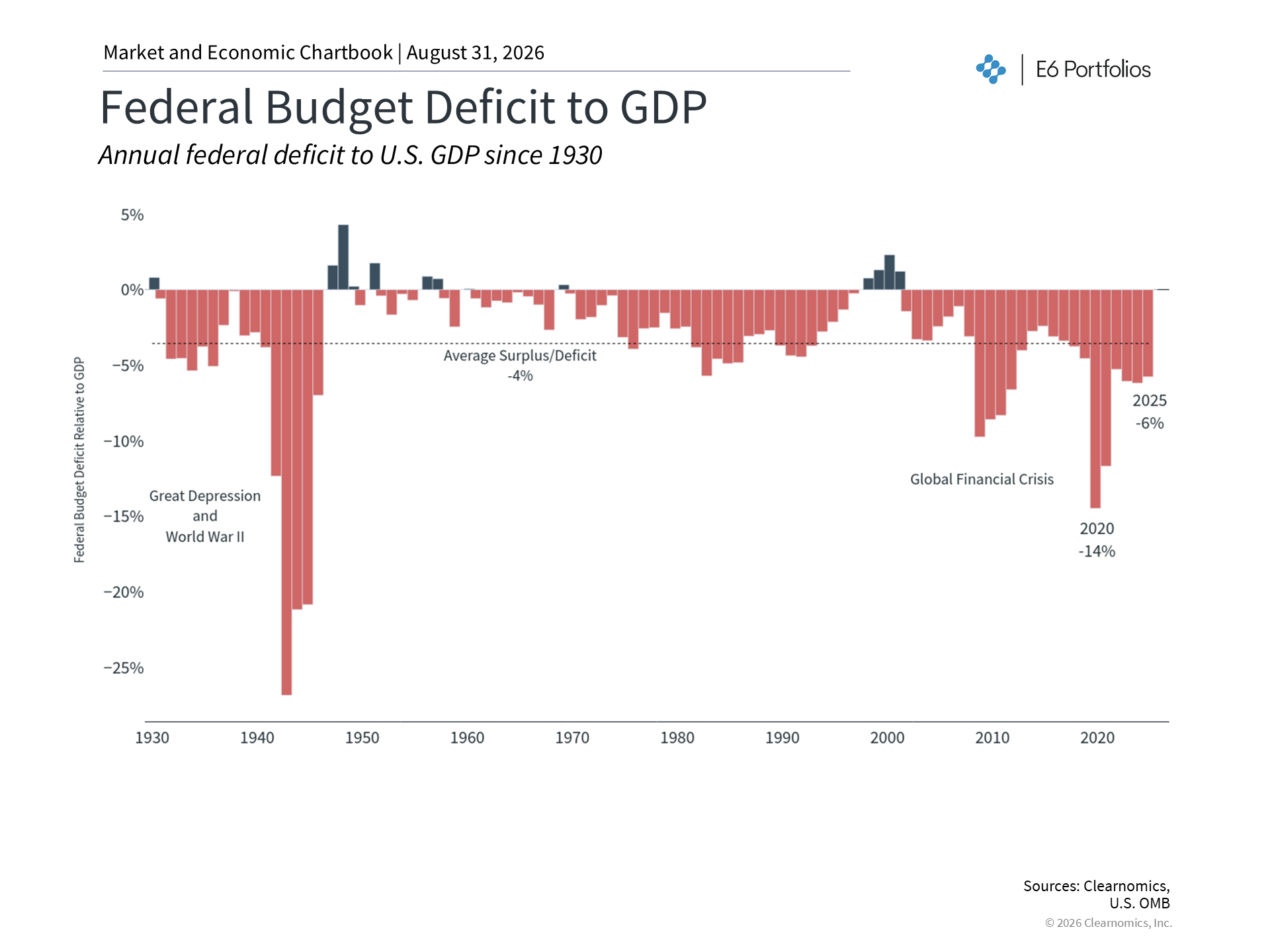 |
Tariff refunds have reduced government revenues, adding to the deficit. The current annual deficit already stands at approximately $1.8 trillion before the fiscal year even ends in September, surpassing the full-year 2025 deficit.5 The Congressional Budget Office projects the full-year deficit will reach $2.1 trillion, about $200 billion more than earlier estimates.6
This has pushed the national debt above $40 trillion for the first time. While this is a concern for many investors, history shows that it is important to separate fiscal issues from everyday investing decisions. Since 1970, the government has run a deficit in all but five years, and yet balanced investment portfolios have performed well over this same period.
Rising debt is putting upward pressure on interest rates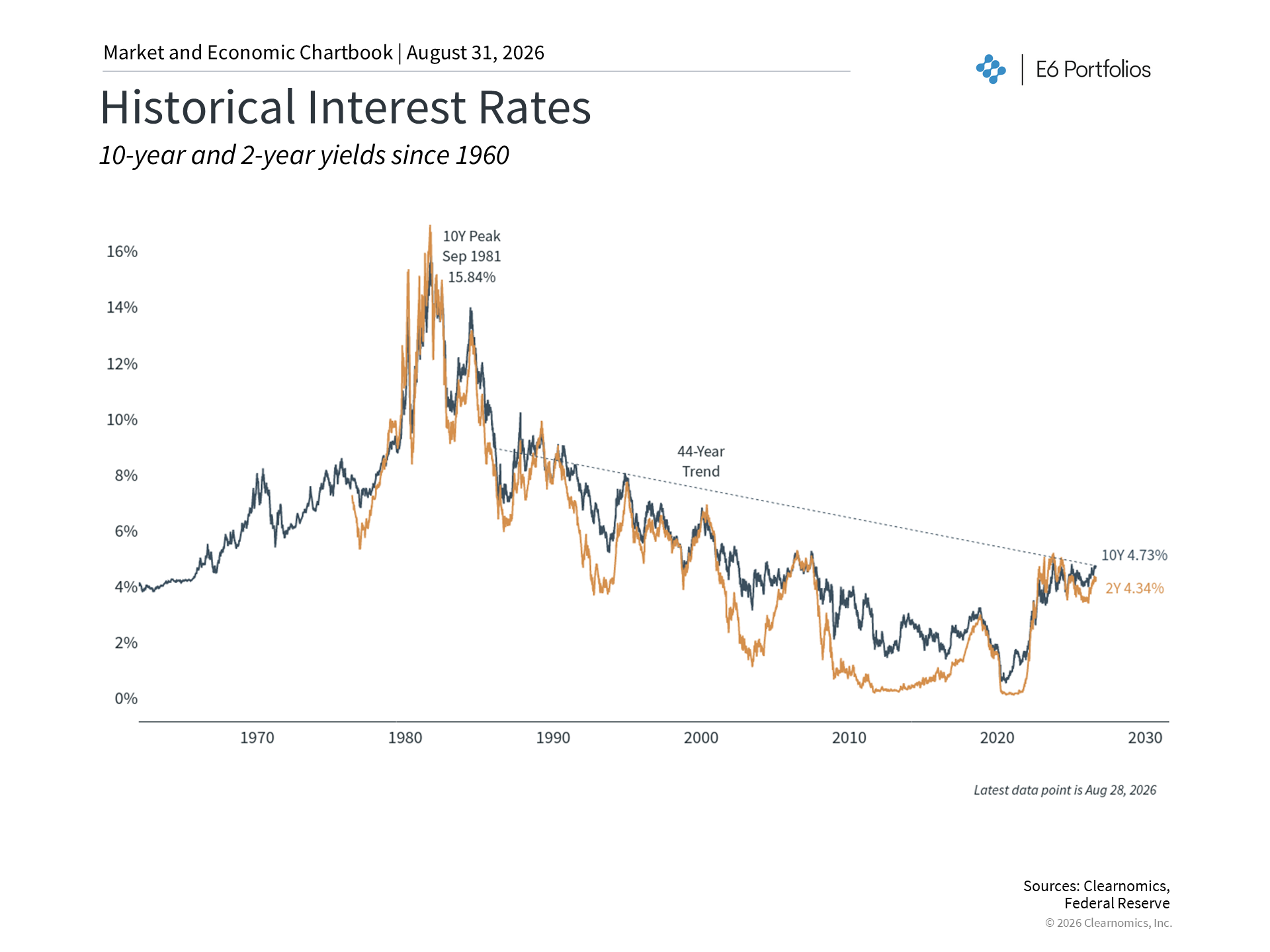 |
Growing debt has contributed to higher long-term interest rates, which are now at levels not seen in several decades. When rates on government bonds (like 10-year and 30-year Treasuries) rise, borrowing becomes more expensive for businesses and households. The Treasury Department has taken steps to help manage this, including buying back its own securities to help keep rates in check.7
Although rates are high compared to the past two decades, they are not extreme by historical standards. In fact, higher rates can be a benefit for investors, as they offer better returns on bonds and other income-generating investments. As concerns about tariffs, debt, and interest rates may continue heading into the midterm elections in November, investors should focus on long-term goals rather than short-term headlines.
The bottom line? Tariff refunds and rising deficits are creating near-term fiscal challenges, but it’s important to keep these developments in perspective. Maintaining a balanced portfolio aligned with long-term financial goals remains the best way to navigate periods of fiscal uncertainty.
References
1. https://www.cbp.gov/trade/programs-administration/trade-remedies/ieepa-duty-refunds
2. https://fiscaldata.treasury.gov/datasets/debt-to-the-penny/debt-to-the-penny
3. https://storage.courtlistener.com/recap/gov.uscourts.cit.17270/gov.uscourts.cit.17270.25.1.pdf#page=3
4. https://fiscaldata.treasury.gov/datasets/monthly-treasury-statement/receipts-of-the-u-s-government
5. https://fiscaldata.treasury.gov/americas-finance-guide/national-deficit
6. https://www.cbo.gov/system/files/2026-08/61983-2026-07-MBR.pdf
7. https://home.treasury.gov/news/press-releases/sb0607